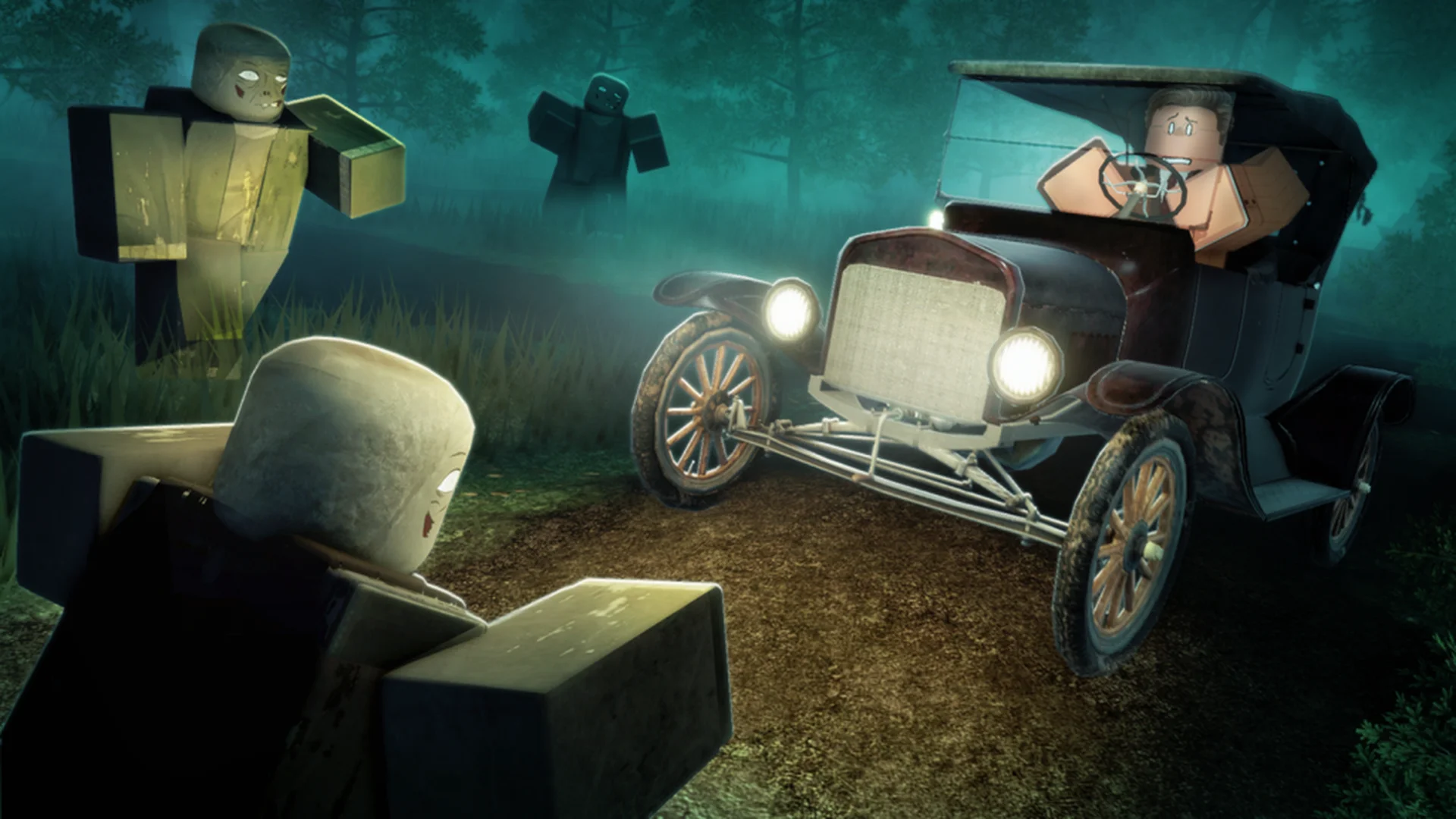
- Road to Ruin multiplayer centers on shared travel, scavenging, combat, and team survival.
- Best setup: Assign route, scavenging, combat, and support responsibilities before leaving the vehicle.
- Main priority: Protect essential supplies instead of collecting every low-value item.
- Strong habit: Stay within supporting distance and regroup before entering dangerous areas.
- Alpha reminder: Recheck routes, resources, and systems after major 2026 updates.
Road to Ruin multiplayer: How Co-op Works
Road to Ruin multiplayer is built around cooperative survival in a Roblox Alpha experience set on a dangerous 1930s road. A successful run requires more than individual combat skill. Players must prepare a vehicle, search locations, share supplies, travel through hazardous areas, and decide when progress is worth the risk.
The core loop is easiest to understand as a shared resource problem. Food, medical supplies, fuel, weapons, ammunition, inventory space, travel time, and player health all affect the entire group. If one player spends too many supplies or wanders too far from the vehicle, the whole team may have fewer options during the next encounter.
The Road to Ruin Roblox listing is the best starting point for checking the current experience entry. Because the game remains in Alpha, specific mechanics and map details may change during 2026.
Route Lead
- Chooses the next destination
- Watches for danger
- Calls when the group advances or retreats
Scavenger
- Searches nearby locations
- Prioritizes valuable supplies
- Returns loot to the shared vehicle
Combat Guard
- Protects exposed teammates
- Responds to hostile encounters
- Avoids unnecessary enemy chases
Support Runner
- Tracks separated players
- Coordinates recovery and regrouping
- Helps distribute shared resources
Recommended Team Roles
These are practical team positions rather than confirmed permanent character classes. They work for fixed groups and public servers because each role has a clear responsibility.
| Role | Main responsibility | Best habit | Common mistake |
|---|---|---|---|
| Route Lead | Navigation and team movement | Set a clear regroup point | Advancing while teammates are separated |
| Scavenger | Loot collection and inventory control | Search close areas first | Filling storage with low-value items |
| Combat Guard | Threat response and protection | Keep a retreat path open | Chasing enemies away from the group |
| Support Runner | Recovery and supply coordination | Carry shared essentials | Leaving the vehicle without communication |
A balanced group usually needs one player focused on movement, one on supplies, and at least one teammate ready to respond when danger appears. Avoid giving every player the same job.
Multiplayer Setup Before Leaving the Vehicle
Preparation determines how much flexibility your group has once the journey begins. Before moving out, check player condition, inventory space, vehicle readiness, and the next objective. The goal is not to carry everything; it is to carry enough of the right categories to support the planned route.
Use the following setup sequence whenever the team starts a new journey or reaches a resupply point.
Confirm the Objective
Identify where the team is going and what must be completed there. A clear objective prevents players from scattering across unrelated locations and helps the group decide whether optional loot is worth the additional risk.
Assign Team Responsibilities
Choose a route lead, scavenger, combat guard, and support player. In a smaller group, one player can cover multiple roles, but everyone should know who is making movement and retreat calls.
Review Shared Supplies
Check food, medical supplies, fuel, weapons, ammunition, and available storage. Keep essential items distributed when possible so one defeat does not remove the team’s entire reserve.
Leave Inventory Space
Do not fill every slot before departure. Open space lets the scavenger collect objective items or higher-value resources without forcing the team to abandon something important later.
Set Communication Rules
Use short callouts for enemy locations, retreat decisions, vehicle movement, and regrouping. Simple communication is usually more useful than constant conversation during a dangerous section.
Departure Checklist
| Preparation check | Ready condition | Why it matters |
|---|---|---|
| Objective | Every player knows the next target | Reduces random movement |
| Vehicle | Team understands where it is parked | Creates a reliable retreat point |
| Supplies | Essential resources are shared | Prevents one-player dependence |
| Inventory | Several slots remain open | Allows valuable loot collection |
| Communication | Retreat and regroup calls are understood | Improves emergency responses |
A full inventory is not automatically a strong inventory. Keep space for medical items, fuel, ammunition, and objective-linked resources that may matter later in the route.
Co-op Combat and Survival Tactics
Combat in Road to Ruin multiplayer should support the journey rather than replace it. Not every hostile encounter deserves a full engagement. Before fighting, check whether the team has a clear retreat path, enough ammunition, and a reason to remain in the area.
The safest formation keeps players close enough to assist one another without standing in one cluster. The combat-focused player can respond first, while the scavenger and support player maintain safer positions. The route lead should watch the next movement option instead of focusing only on the nearest enemy.
Before Fighting
- Identify the safest direction to retreat
- Check whether teammates are together
- Decide if the encounter blocks progress
During Fighting
- Focus on the nearest immediate threat
- Protect separated or weakened players
- Avoid spending every resource at once
After Fighting
- Confirm team health and ammunition
- Regroup before searching
- Return important supplies to the vehicle
When to Fight or Retreat
| Situation | Recommended decision | Team priority |
|---|---|---|
| A threat blocks the objective | Fight if the group is prepared | Maintain formation |
| Enemies appear near the vehicle | Defend or fall back together | Protect supplies and escape access |
| The team is separated | Regroup before committing | Restore supporting distance |
| Valuable loot is secured | Consider retreating | Preserve the successful run |
| Supplies are low | Avoid optional fights | Reach the next safe point |
A common failure is allowing one player to chase an enemy beyond the support range of the group. That turns a manageable encounter into a rescue situation and may force the team to spend medical supplies or abandon the planned route.
Another mistake is beginning a major encounter immediately after a long search. Before activating an objective or entering a high-risk location, redistribute ammunition and healing items, confirm escape space, and make sure no teammate is still returning from the vehicle.
If the group is separated, low on supplies, or carrying important loot, retreating is often the stronger multiplayer decision. Progress only matters when the team can preserve it.
Loot, Vehicles, and Route Management
The vehicle acts as more than transportation. It is a central regrouping point, a reference for navigation, and a place to manage shared supplies. Players should return regularly to unload valuable items and confirm that the next section remains practical.
Road planning should balance safe progress against higher-yield exploration. A short detour may provide useful supplies, but additional distance also increases exposure, travel time, and the chance of team separation.
Resource Priority Table
| Resource category | Priority | Best use | Team rule |
|---|---|---|---|
| Medical supplies | Very high | Serious injuries and dangerous transitions | Distribute across players |
| Fuel | High | Required vehicle movement | Assign one player to track it |
| Ammunition | High | Confirmed threats and major encounters | Transfer spare rounds to the key combat player |
| Food | High | Longer routes and extended travel | Avoid using it immediately after finding it |
| Weapons | High | Threat response and protection | Match equipment to team roles |
| Miscellaneous loot | Medium | Objectives and future utility | Drop duplicates when space is limited |
Safe Route Versus High-Yield Route
| Route style | Benefits | Risks | Best for |
|---|---|---|---|
| Safe route | Less exposure, easier regrouping | Fewer optional resources | New teams and low-supply runs |
| High-yield route | More loot opportunities | Extra travel and enemy pressure | Prepared teams with open inventory |
| Direct objective route | Faster progress | May skip useful supplies | Teams with strong reserves |
| Search-and-return route | Better inventory control | Requires repeated vehicle trips | Organized groups with clear roles |
The most reliable pattern is to search nearby locations first, return to the vehicle, and only then decide whether a longer detour is justified. This keeps the group’s resources centralized and gives everyone a clear fallback point.
Before Entering a Dangerous Section:
- Confirm the next objective and route
- Check health, ammunition, fuel, and medical supplies
- Leave enough inventory space for objective items
- Choose a retreat direction and regroup point
- Make sure every teammate is ready to move
After each major search, return important loot to the vehicle, redistribute supplies, and reassess the next route. This simple cycle reduces inventory confusion and prevents unnecessary overextension.
Best Multiplayer Habits for Alpha Runs
Road to Ruin is still in Alpha, so the strongest long-term habit is flexibility. Map layouts, enemy behavior, item values, and route requirements may change during future releases. Treat this guide as a stable co-op framework rather than a fixed map solution.
Use short communication, shared priorities, and conservative resource decisions. Public servers benefit especially from visible role assignments because players may join with different experience levels or leave during a run.
Public Server and Fixed Team Comparison
| Team type | Recommended approach | Main challenge | Best adjustment |
|---|---|---|---|
| Fixed team | Assign permanent responsibilities | Overconfidence | Recheck supplies before each route |
| Public server | Use simple visible callouts | Unclear coordination | Stay near the vehicle and route lead |
| Two-player group | Combine roles carefully | Limited rescue options | Avoid optional fights |
| Larger group | Divide tasks without splitting too far | Scattered movement | Set frequent regroup points |
Follow the official Road to Ruin Roblox search page for the current experience entry. The available Road to Ruin listing information also identifies the project as a multiplayer survival horror experience from Studio Lumis. Check in-game changes after each Alpha update before relying on older route or item assumptions.
Build habits around communication, positioning, and resource control. These fundamentals are more likely to remain useful than a route that depends on one temporary map layout or item balance.
Q: What is the main goal of Road to Ruin multiplayer?
The main goal is to travel through dangerous areas, search for useful resources, manage the vehicle, complete objectives, and keep the team supplied through the journey.
Q: Which roles should a Road to Ruin multiplayer team use?
A practical team can assign a route lead, scavenger, combat guard, and support runner. These are flexible responsibilities rather than confirmed permanent classes.
Q: Should players fight every enemy encounter?
No. Fight when a threat blocks progress or creates an immediate danger. Retreat when the team is separated, low on supplies, or already carrying valuable loot.
Q: How should a small team manage resources?
Keep essential medical supplies, fuel, ammunition, and food shared rather than assigning everything to one player. Small teams should also avoid optional fights and long detours.