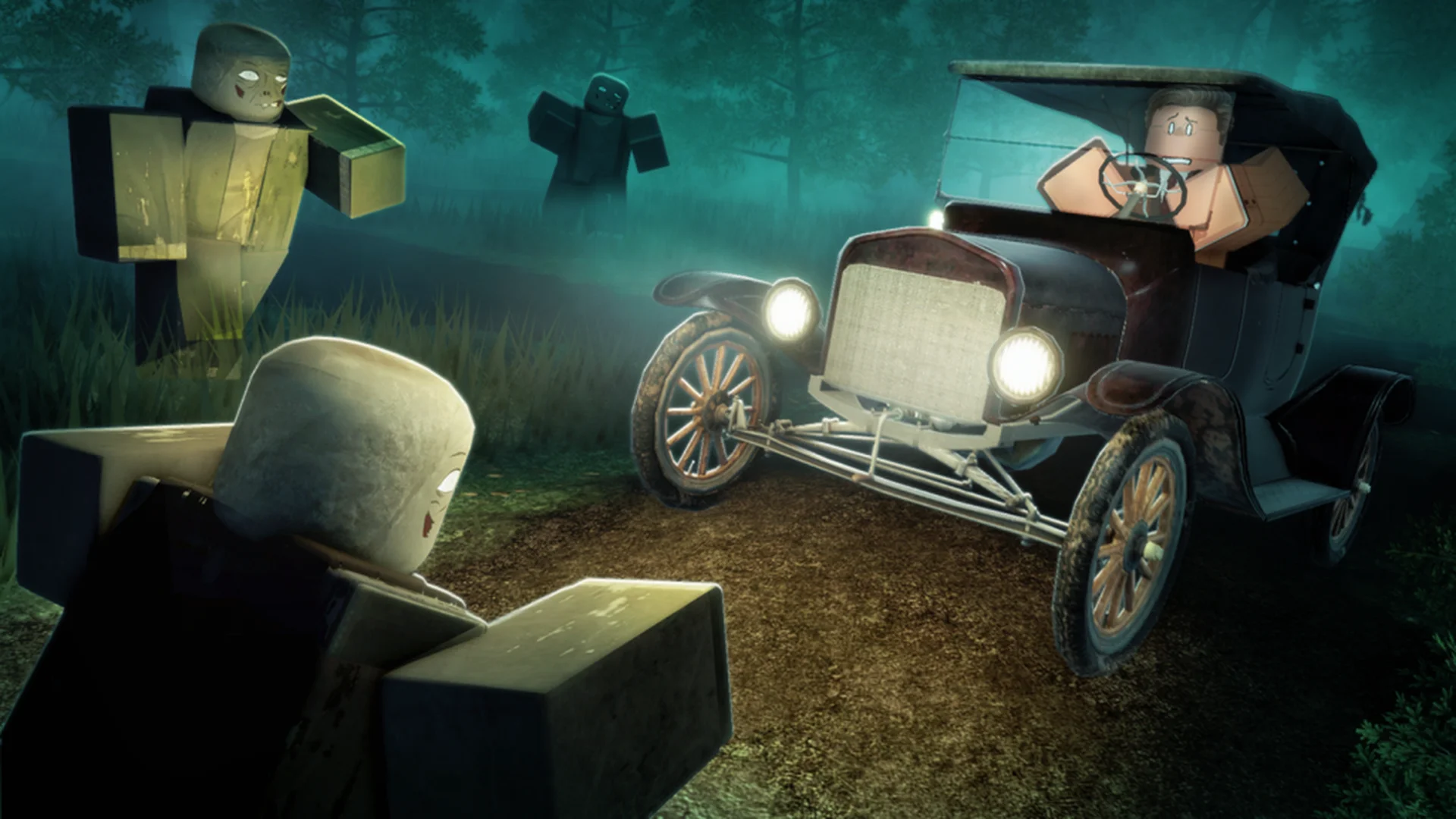
- Road to Ruin team guide: Build your squad around route control, scavenging, combat, and support.
- Best team setup: Combine a Survival Lead, Scavenger, Combat Guard, and Support Runner.
- Core rule: Treat fuel, medical supplies, ammunition, and vehicle space as shared resources.
- Safer method: Search nearby areas first, regroup often, and retreat before the team becomes weakened.
- Alpha reminder: Formal classes may change, so use these roles as flexible team responsibilities.
Road to Ruin Team Guide: Core Roles
The best Road to Ruin team guide starts with responsibilities rather than fixed classes. Road to Ruin is an Alpha multiplayer survival horror experience on Roblox, and the available systems may change as development continues. For now, a balanced group should assign clear jobs before leaving the vehicle.
A role does not permanently lock a player into one activity. Instead, it gives the team a simple plan for movement, looting, combat, and recovery. Players can switch roles when the route, inventory, or encounter demands it.
| Team Role | Main Focus | Best Responsibility | Priority |
|---|---|---|---|
| Survival Lead | Route control and team safety | Decide when to advance, fight, search, or retreat | High |
| Scavenger | Loot and inventory efficiency | Find valuable supplies and return them to the vehicle | High |
| Combat Guard | Threat response | Protect the group during enemy encounters | High |
| Support Runner | Recovery and coordination | Track separated players and move shared supplies | Medium |
Survival Lead
- Sets the route pace
- Calls regroup points
- Watches for unnecessary fights
- Keeps the team moving toward the objective
Scavenger
- Searches nearby locations
- Prioritizes useful loot
- Avoids low-value inventory clutter
- Reports fuel, medical items, and ammunition
Combat Guard
- Stays near exposed teammates
- Responds to hostile encounters
- Protects the retreat path
- Avoids chasing threats too far
Support Runner
- Carries shared supplies
- Helps separated teammates
- Tracks vehicle access
- Supports regrouping after searches
Assign one player to make movement decisions, but let the whole team report danger, supplies, and route changes. Clear callouts prevent duplicated searches and accidental separation.
How to Build a Balanced Co-op Setup
A reliable team setup should cover four practical needs: survival, resources, combat, and recovery. Smaller groups can combine roles, while larger groups can assign each responsibility to a different player.
For a two-player team, one player should lead movement and handle combat while the other focuses on scavenging and support. A three-player group can separate the Scavenger from the Combat Guard. A four-player squad can use the full role structure.
| Team Size | Recommended Setup | Main Strength | Main Risk |
|---|---|---|---|
| 2 players | Survival Lead plus Combat Guard; Scavenger plus Support Runner | Fast decisions and simple coordination | Limited coverage during searches |
| 3 players | Survival Lead, Scavenger, Combat Guard | Strong balance between movement, loot, and defense | Support duties may be shared |
| 4 players | One player per role | Best coverage for organized co-op | More chances for players to split up |
| Public server | Flexible lead, scavenger, guard, and support duties | Works with unfamiliar teammates | Communication may be inconsistent |
Choose the Route Lead
Select the player who will decide when the group leaves the vehicle, searches a location, or returns to safety. This player should communicate clearly and avoid rushing ahead of the team.
Assign Shared Resource Duties
Choose who tracks fuel, medical supplies, ammunition, and inventory space. The assigned player does not own these resources; they help the group decide how to distribute them.
Set the Combat Position
Decide which player stays closest to the first point of danger. The Combat Guard should protect vulnerable teammates without pulling enemies away from the planned route.
Confirm the Recovery Plan
Before leaving the vehicle, agree on where the team will regroup and what happens if one player becomes separated. This is especially important in public servers.
Recommended role combinations:
- Two-player run: Keep both players within supporting distance and avoid long side searches.
- Three-player run: Let the Scavenger search while the Lead and Guard maintain a safe position.
- Four-player run: Use the Support Runner to carry shared supplies and monitor players returning from side areas.
- Public server: Use short instructions such as “return to vehicle,” “hold position,” or “search left.”
A balanced team is not the team with the most combat focus. It is the team that can travel, collect supplies, survive an encounter, and regroup without losing its route plan.
Vehicle, Loot, and Route Coordination
The vehicle is the center of a successful journey. Before departure, check supplies, storage space, player readiness, and the next objective. During the run, return to the vehicle regularly instead of letting valuable items remain scattered across multiple inventories.
Road to Ruin rewards teams that balance immediate survival with future route needs. Searching every container may create extra risk, while leaving too early can create supply problems later. Use the route’s distance, danger, and available storage to decide how much exploration is worthwhile.
| Resource | Carry Priority | Best Use Timing | Team Rule |
|---|---|---|---|
| Food | High on long routes | Use when recovery provides meaningful value | Share according to movement and objective needs |
| Medical supplies | Very high | Reserve for serious injuries and dangerous transitions | Distribute the reserve when possible |
| Fuel | High when travel depends on it | Spend only for required movement | Assign one player to track the supply |
| Weapons | High for the Combat Guard | Equip before known danger areas | Avoid giving every player the same role |
| Ammunition | Very high for ranged strategies | Save for confirmed or high-risk threats | Transfer spare rounds to the most important weapon |
| Miscellaneous resources | Medium, or high for objectives | Keep until the related task is complete | Drop low-value duplicates when space is needed |
Before Leaving the Vehicle:
- Confirm every player is ready and understands the route
- Check food, medical supplies, fuel, weapons, and ammunition
- Leave enough inventory space for valuable discoveries
- Assign who tracks shared supplies
- Choose a regroup point and retreat direction
Use this quick priority order when storage is limited:
- Keep objective-linked items.
- Protect medical supplies and fuel.
- Maintain enough ammunition for the next dangerous section.
- Carry food according to route length and team condition.
- Remove duplicate or low-value items only after checking with the group.
Do not let one player carry every essential resource. If that player becomes separated or defeated, the entire team may lose access to healing, fuel, or ammunition.
Combat and Retreat Rules for Teams
Combat decisions should protect the full journey, not just win the current encounter. Standard hostile encounters may become more dangerous when players lose spacing, chase targets, or fight without a clear retreat path. Keep the group compact and focus on the threat that can reach teammates first.
Higher-pressure enemy groups require stronger preparation. Before entering a dangerous area, confirm that the team has enough health, ammunition, and escape space. Boss-level encounters should be treated as objectives that require role assignments rather than spontaneous fights.
| Encounter Type | Danger Level | Team Response | Avoid |
|---|---|---|---|
| Standard hostile encounter | Moderate | Focus nearby threats and keep a retreat route open | Chasing enemies away from the route |
| Special enemy group | High | Hold a defensible position and regroup | Splitting damage across distant targets |
| Boss-level encounter | Very high | Assign pressure, support, and survival duties | Triggering the fight without escape space |
| Environmental threat | Variable | Scout slowly and maintain formation | Sending support players into the first danger point |
A simple combat formation works well:
- Combat Guard: Takes the first defensive position and reports threat direction.
- Survival Lead: Decides whether to engage, reposition, or retreat.
- Scavenger: Stops looting and moves toward the safe regroup point.
- Support Runner: Protects shared supplies and helps recover separated players.
Retreating is often the correct decision when:
- The group is separated.
- The team has already collected the main objective.
- Ammunition or medical supplies are becoming limited.
- The vehicle is close enough to provide a safe regroup point.
- The enemy encounter is consuming more resources than its reward justifies.
Call out the threat, the direction, and the next action. “Enemies ahead, fall back right” is more useful than a long explanation during a high-pressure encounter.
A Practical Team Run Walkthrough
Use this walkthrough to organize a full journey from preparation to extraction. It works for fixed groups and can be simplified for public servers.
| Run Phase | Team Objective | Key Check |
|---|---|---|
| Preparation | Equip and assign responsibilities | Is every player ready? |
| Early search | Collect essential supplies | Are players staying near the vehicle? |
| Route travel | Preserve resources and formation | Is the next destination clear? |
| Danger section | Control threats and avoid overextension | Is retreat still possible? |
| Objective area | Complete the task and protect progress | Are supplies reserved for the return? |
| Regroup | Return with players and valuable resources | Has the team confirmed everyone is present? |
Prioritize nearby searches before long detours. A short route back to the vehicle gives the team more opportunities to unload, reorganize, and respond to changing danger. High-yield detours can be worthwhile, but only when the expected supplies justify the added exposure.
The Alpha version may change map structure, resource placement, enemy behavior, and route progression. Recheck your team plan after major updates rather than assuming an old route remains optimal.
Treat every route plan as adjustable. The role system and preparation rules remain useful even when specific locations, enemy patterns, or resource values change.
Road to Ruin Team Guide FAQ
Q: What is the best team composition in Road to Ruin?
A four-player group works well with a Survival Lead, Scavenger, Combat Guard, and Support Runner. Smaller teams should combine roles instead of trying to cover every job separately.
Q: Are these official Road to Ruin classes?
These are practical team roles for the Alpha experience, not confirmed permanent classes. Formal character or class systems may develop as the game receives updates.
Q: Who should carry fuel and medical supplies?
Assign one player to track shared supplies, but distribute critical items when possible. Keeping every essential resource on one player creates a serious recovery risk.
Q: When should a team retreat?
Retreat when players become separated, supplies are running low, the objective is already complete, or the encounter threatens the team’s ability to continue the journey.
For current game access and the latest listing, check the Road to Ruin Roblox search page. The game is presented as an Alpha multiplayer survival horror experience, so strategy details should be reviewed after future updates.
Stay close, share essential resources, and make retreat decisions before the team reaches a critical state. Consistent coordination matters more than a rigid class choice.