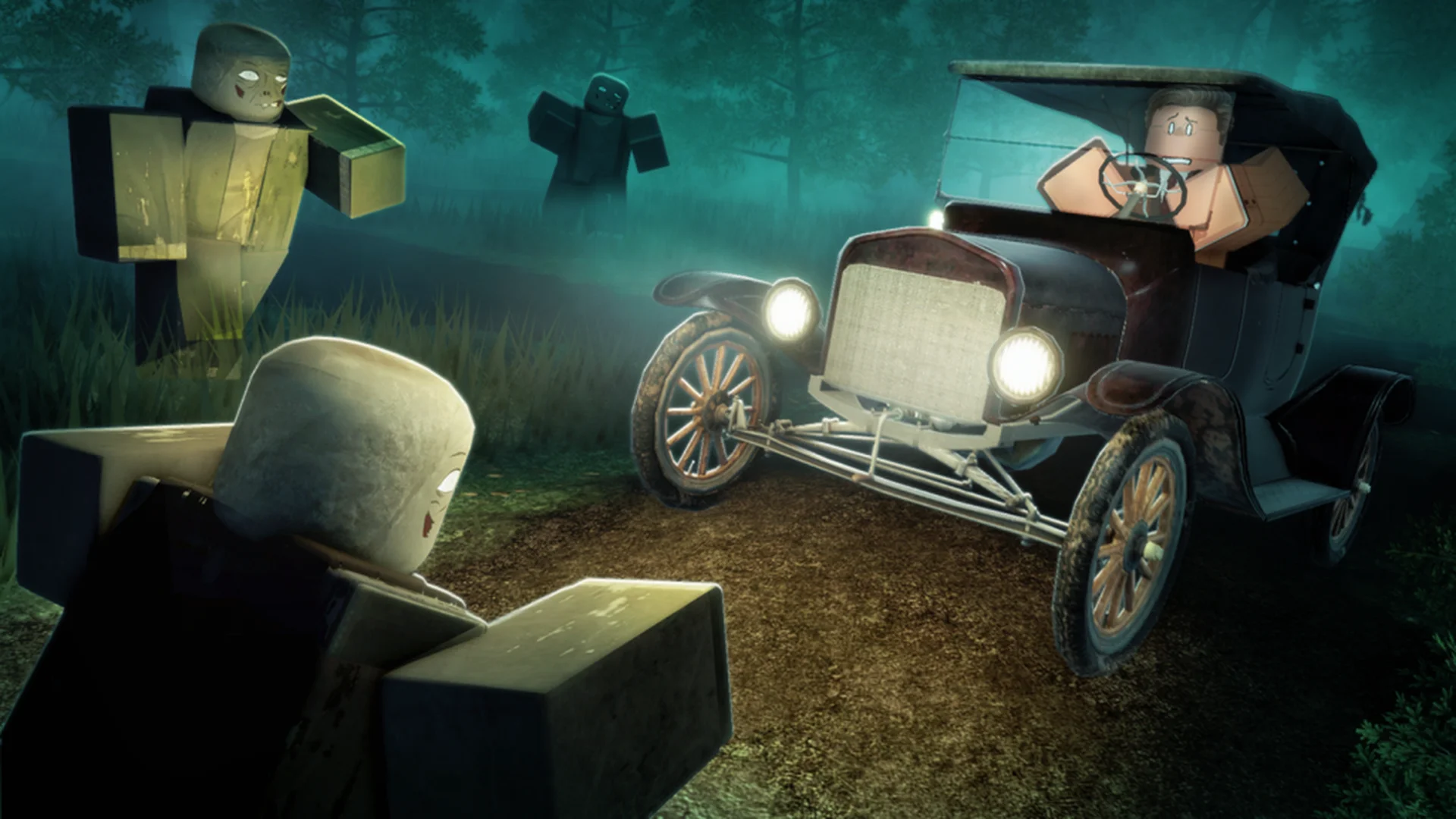
- Road to Ruin co op works best when every player has a clear responsibility before departure.
- Shared supplies matter more than personal loot during long routes and dangerous encounters.
- Vehicle control gives the team a reliable regroup point and helps protect valuable resources.
- Safe routes are usually better for beginners than high-yield detours with limited escape options.
- Alpha systems may change, so recheck route, enemy, and item information after major updates.
Road to Ruin co op Team Setup
Road to Ruin co op centers on preparing a vehicle, searching dangerous locations, managing supplies, and completing a journey together. The strongest teams assign responsibilities before leaving the vehicle instead of deciding roles after an enemy encounter begins.
The Alpha experience does not require a formal class system to support effective teamwork. Players can organize around practical roles such as route lead, scavenger, combat guard, and support runner. These roles make public servers easier to coordinate and give fixed groups a simple structure for every journey.
| Team Role | Main Responsibility | Best Priority |
|---|---|---|
| Survival Lead | Controls movement, route decisions, and retreats | Team safety |
| Scavenger | Searches locations and evaluates loot | Resource efficiency |
| Combat Guard | Protects teammates during threats | Enemy control |
| Support Runner | Tracks supplies and helps separated players | Recovery and regrouping |
Survival Lead
- Selects the next route section
- Calls for movement or retreat
- Keeps the team near a safe regroup point
Scavenger
- Searches nearby locations first
- Prioritizes useful supplies
- Returns valuable loot to the vehicle
Combat Guard
- Watches exposed approaches
- Protects weaker or separated players
- Avoids unnecessary enemy pursuit
Support Runner
- Carries shared supplies
- Tracks missing teammates
- Helps the group recover after encounters
Use role names as responsibilities rather than permanent classes. A player can switch jobs when the route, inventory, or team size changes.
Step-by-Step Co-op Journey Plan
A successful run depends on preparation before the first road section. Use the following sequence to keep the team organized and reduce avoidable losses.
Inspect the Vehicle and Inventory
Check the vehicle, available supplies, healing items, fuel, weapons, ammunition, and open inventory space. Do not allow one player to carry every essential resource. Distribute important items so the team can continue after a single player is separated.
Set the Route Lead
Choose one player to make movement decisions. The route lead should announce the next destination, identify when the group should search, and decide when a detour is no longer worth the risk.
Search Nearby Locations First
Start with locations close to the vehicle or current route. Nearby searches give the team a safer return path and reduce the chance of losing valuable supplies during an extended detour.
Regroup Before Advancing
Return to the vehicle or an agreed checkpoint before entering a dangerous section. Unload shared supplies, compare health and ammunition, and confirm that every player is ready.
Choose Between Fighting and Retreating
Fight when the encounter protects an important objective or blocks necessary progress. Retreat when the team is separated, low on supplies, or carrying valuable loot that would be difficult to replace.
The vehicle should function as more than transportation. It is the team’s storage point, recovery location, and communication anchor. Frequent regrouping also prevents one player from traveling too far ahead while another is still searching.
| Journey Phase | Team Action | Common Mistake |
|---|---|---|
| Departure | Assign roles and check supplies | Leaving without a shared plan |
| First Search | Loot nearby areas efficiently | Splitting into distant locations |
| Mid-route | Return, unload, and redistribute | Carrying all supplies personally |
| Danger Section | Stay close and preserve ammunition | Chasing enemies away from safety |
| Objective Area | Prepare before activation | Starting an encounter while weakened |
A separated player can force the group into an unsafe rescue attempt. Use short callouts, set regroup points, and wait before moving into the next major area.
Resource Sharing and Loot Priorities
Road to Ruin rewards teams that treat essential items as shared resources. Food, medical supplies, fuel, weapons, ammunition, and objective materials should be judged by the next route section rather than by personal preference.
Inventory space is limited, so every player should understand what to carry, what to use, and what to return to the vehicle. Low-value duplicates can be left behind when they prevent the team from collecting a necessary item.
| Loot Category | Carry Priority | Recommended Use |
|---|---|---|
| Food | High on long routes | Use when the recovery value is meaningful |
| Medical Supplies | Very high | Save for serious injuries or dangerous transitions |
| Fuel | High when travel depends on it | Confirm the next destination before spending |
| Weapons | High for combat roles | Equip reliable options before danger areas |
| Ammunition | Very high for ranged players | Reserve for confirmed or high-risk threats |
| Objective Items | High when required | Keep until the related task is complete |
The safest distribution method is to assign one player to monitor shared supplies while allowing every teammate to keep immediate survival items. This avoids two common problems: one player hoarding essential resources and the whole team discovering too late that nobody has the item needed for the next objective.
| Situation | Best Team Response | Why It Helps |
|---|---|---|
| One player has excess medical items | Redistribute at the vehicle | Reduces the risk of losing the whole healing reserve |
| Ammunition is running low | Focus on avoidable threats | Preserves resources for mandatory encounters |
| Inventory is nearly full | Drop low-value duplicates | Creates space for objective-linked loot |
| Fuel is limited | Confirm the route first | Prevents waste on unnecessary movement |
| A teammate is injured | Stabilize before advancing | Keeps the group effective during the next section |
Before leaving a location, ask three questions: what does the team need next, who is carrying it, and where will it be stored?
Before Leaving a Search Area:
- Return essential supplies to the vehicle or shared storage
- Confirm that medical items are distributed across the team
- Check ammunition before entering the next danger section
- Leave inventory space for objective items and high-value loot
- Tell the team which route section comes next
Combat, Retreats, and Vehicle Safety
Enemy encounters become more manageable when the team controls spacing and preserves an escape route. The goal is not to fight every threat. The goal is to complete the journey with enough health, supplies, and ammunition to handle the next challenge.
A combat guard should stay close enough to protect the scavenger and support runner without pulling the entire group away from the vehicle. Players should avoid chasing enemies into unknown areas, especially when the team has already collected valuable resources.
| Encounter Type | Danger Level | Recommended Response |
|---|---|---|
| Standard hostile encounter | Moderate | Focus the nearest threat and keep a retreat path |
| Special enemy group | High | Hold a defensible position and regroup before looting |
| Boss-level encounter | Very high | Prepare health, ammunition, roles, and escape space |
| Environmental threat | Variable | Scout slowly and retreat before the route collapses |
Use these combat priorities:
- Keep the group within supporting distance.
- Call out enemy positions with short, clear messages.
- Focus on threats that can reach the team first.
- Avoid spending ammunition on enemies that can be bypassed.
- Keep medical supplies available for the most dangerous route section.
- Return to the vehicle after a major encounter instead of immediately extending the search.
The vehicle is also a safety tool. It provides a recognizable regroup location and gives the team a place to reorganize its inventory. When a player becomes separated, the vehicle should be the default meeting point unless the route lead calls for a different location.
Retreat early when the team loses formation, the route becomes unclear, or the next fight would consume supplies needed for the objective. A controlled retreat protects more progress than a rushed rescue.
Public Server and Fixed-Team Strategies
Road to Ruin co op feels different depending on whether the group uses a public server or a fixed team. Public servers require simpler instructions and more visible regrouping. Fixed teams can use more specialized roles because players already understand each other’s habits.
| Team Type | Recommended Setup | Communication Style |
|---|---|---|
| Two players | Survival Lead plus flexible Support Runner | Frequent position checks |
| Three players | Lead, Scavenger, and Combat Guard | Assign one shared storage role |
| Four players | Lead, Scavenger, Guard, and Support Runner | Use fixed regroup points |
| Public server | Flexible roles with one clear leader | Short instructions and visible movement |
For public servers:
- Explain the next destination before leaving the vehicle.
- Use direct instructions such as “search nearby,” “return,” or “hold position.”
- Avoid assuming that every player knows the route.
- Keep the group together during enemy encounters.
- Treat the vehicle as the default regroup point.
For fixed teams:
- Rotate the route lead when players learn different sections.
- Let the scavenger control inventory evaluation.
- Reserve the combat guard for high-risk transitions.
- Decide in advance when the group will abandon a detour.
- Review failed runs after the journey and adjust one habit at a time.
A good team does not need constant voice communication. Consistent callouts are more useful than long conversations during combat. The most valuable information is usually a player’s location, the next route decision, a missing resource, or a retreat warning.
Use the same words for recurring actions. Consistent callouts make public-server coordination easier and help fixed teams react without hesitation.
Road to Ruin Co-op FAQ
Q: What is the best Road to Ruin co op team setup?
A balanced four-player setup uses a Survival Lead, Scavenger, Combat Guard, and Support Runner. Smaller teams can combine the Scavenger and Support Runner roles.
Q: Should the team search every location?
No. Search locations when the expected supplies justify the travel and danger. Nearby areas are usually better for beginners because they provide a safer return route.
Q: Who should carry medical supplies and fuel?
Distribute medical items across more than one player when possible. Fuel should have a clear owner who confirms the next destination before spending it.
Q: When should a co-op team retreat?
Retreat when players are separated, the team is low on health or ammunition, the route becomes unsafe, or the group is carrying valuable loot that should be protected.
The most reliable co-op habit is simple: prepare together, search with a plan, regroup often, and retreat before a manageable problem becomes a failed journey.