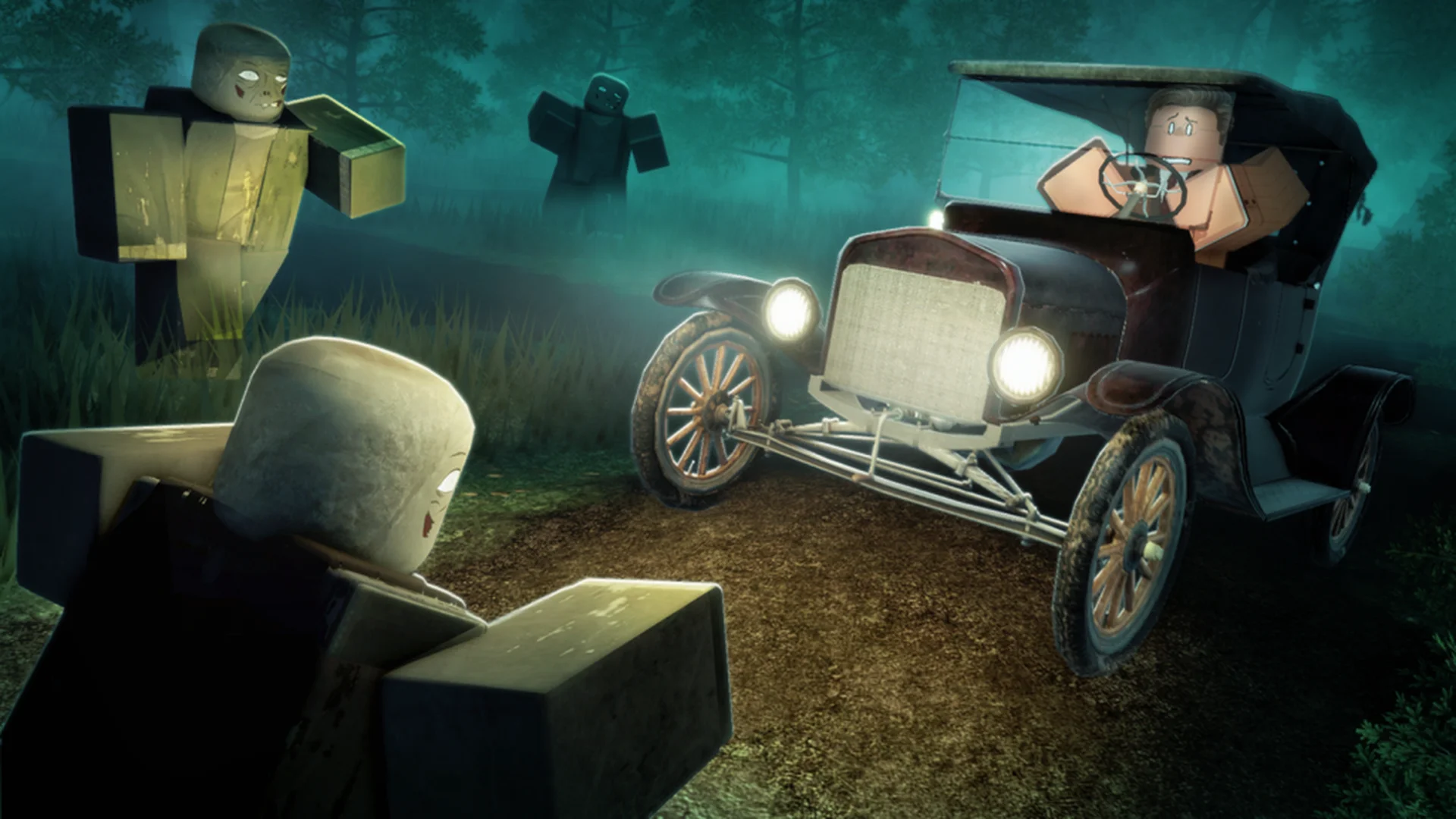
- Road to Ruin revive teammates tactics depend on staying together and protecting the rescue route.
- Confirm the downed state before spending supplies, because the Alpha build may change recovery systems.
- Secure the area first so a rescue does not create a second casualty.
- Share medical supplies and keep one player available for support during dangerous sections.
- Return to the vehicle when the rescue area becomes too dangerous or resources are running low.
Road to Ruin Revive Teammates: What Is Confirmed
Road to Ruin is an Alpha Roblox multiplayer survival horror game built around vehicle travel, scavenging, resource management, enemy encounters, and team survival. The available public information confirms the importance of cooperation, but it does not publish a verified revive button, recovery timer, revive item, or fixed downed-state interface.
That means players should avoid treating unconfirmed controls as permanent mechanics. The safest approach is to use a rescue plan that works whether the current build uses a direct revive interaction, a medical item, a recovery timer, or a return-to-vehicle recovery step.
The Road to Ruin Roblox listing should be checked for the current Alpha experience and any updated in-game instructions. The public Road to Ruin game information page supports the broader co-op survival loop, including vehicle travel, scavenging, and dangerous encounters.
| Situation | Recommended response | Main risk |
|---|---|---|
| Teammate is down near the group | Secure nearby threats, then attempt the available recovery interaction | A second player becomes downed |
| Teammate is separated | Mark the location and regroup before moving | The rescue team gets lost or split |
| Vehicle is nearby | Use the vehicle as a fallback and supply point | Players rush past danger without checking the route |
| Supplies are low | Prioritize extraction or regrouping over risky recovery attempts | The entire team loses its remaining resources |
| Enemy pressure is increasing | Retreat, reposition, and reassess the rescue | Fighting in an exposed area |
Do not assume a revive timer, medical item, or recovery animation exists unless the current in-game build displays it. Road to Ruin is in Alpha, so rescue mechanics may change between updates.
The core rule is simple: a revive attempt is only successful when the surviving team can remain alive afterward. A rescue that costs the entire group’s ammunition, healing supplies, or escape route is usually a poor trade.
Prepare Before You Need to Revive Teammates
The best rescue is prepared before the team reaches a dangerous road section. Assign responsibilities while everyone is healthy, identify who carries shared supplies, and decide which player will lead a retreat if an encounter becomes unmanageable.
A balanced group does not need formal classes to use effective roles. The Alpha-focused role structure below works for fixed groups and public servers.
Route Lead
- Watches the path ahead
- Calls when to advance or retreat
- Keeps the group near a known route
Combat Guard
- Responds to immediate threats
- Protects the downed player
- Avoids chasing enemies too far
Support Runner
- Tracks medical and shared supplies
- Helps separated players regroup
- Returns key resources to the vehicle
| Preparation item | Why it matters | Suggested priority |
|---|---|---|
| Medical supplies | May support recovery or stabilize injured players | Very high |
| Ammunition | Creates space around the rescue location | High |
| Vehicle access | Provides a fallback point for regrouping | High |
| Inventory space | Allows the team to move shared supplies efficiently | Medium |
| Communication plan | Prevents players from moving in opposite directions | Very high |
Before leaving the vehicle, confirm three details:
- Who is leading the route?
- Who is carrying shared medical supplies?
- Where will the team regroup if someone is separated?
Use short callouts instead of long explanations. “Down near the building,” “vehicle route is clear,” and “retreat now” are easier to understand during combat than complicated instructions.
Keep at least one player focused on support rather than having every teammate chase loot or enemies. A flexible support player makes rescue decisions faster and reduces unnecessary separation.
The vehicle should also be treated as a team resource. Returning to unload supplies, regroup, and confirm the next route is not wasted time. It reduces the chance that one player carries every essential item and becomes the only person capable of supporting a recovery attempt.
Step-by-Step Road to Ruin Rescue Method
Use this sequence whenever a teammate becomes downed, isolated, or unable to continue. Adjust the interaction step to whatever the current Alpha build displays.
Call the Location
Ask the downed player to identify the nearest landmark, road section, building, or vehicle position. Do not send multiple players in different directions. The route lead should repeat the location so the entire team follows the same plan.
Check the Rescue Route
Before moving, identify enemies, narrow passages, exposed areas, and the safest path back to the vehicle. If the route is unclear, send one player to scout while the others hold a defensible position.
Secure the Immediate Area
Remove or avoid the threat that can reach the group first. Do not spend all ammunition on distant targets if the downed player is already in a recoverable position. The goal is to create a short safe window, not necessarily clear the entire area.
Use the Available Recovery Interaction
Approach the teammate only after the area is controlled enough to prevent an immediate interruption. Follow the current on-screen prompt, use the appropriate support item if the build provides one, and keep one player watching the route.
Extract and Regroup
Once the teammate is mobile or the recovery attempt is complete, move together toward the vehicle or the next safe checkpoint. Redistribute medical supplies and confirm whether continuing the route is still practical.
| Rescue phase | Lead player | Support action | Stop condition |
|---|---|---|---|
| Locate | Route Lead | Confirm landmarks and direction | Location remains unknown |
| Approach | Combat Guard | Watch enemy movement and retreat path | Group becomes surrounded |
| Recovery | Support Runner | Use the displayed recovery option | Interaction cannot be completed safely |
| Withdrawal | Route Lead | Direct movement to vehicle or checkpoint | Team loses formation |
| Reassessment | Entire team | Check health, supplies, and route risk | Continuing would endanger the group |
If the current build has no direct revive interaction, the same process still helps. The team can protect the downed player’s location, test the available recovery option, and retreat when the game provides no safe way to continue.
Only begin the recovery interaction when one teammate can protect the player performing it and another teammate can identify the retreat route.
Do not let the rescue turn into an unplanned loot run. Ignore low-value containers, avoid unnecessary detours, and keep the objective focused on recovering the teammate and preserving the team.
Combat Decisions During a Teammate Rescue
Enemy pressure is the main reason revive teammates attempts fail. Players often focus on the downed teammate and ignore the surrounding route, allowing enemies to approach from multiple directions. A safer rescue separates duties: one player watches the threat, one handles recovery, and one remains ready to retreat or assist.
Use the following decision model:
| Threat level | Team condition | Best action |
|---|---|---|
| Low | Most players healthy, route visible | Attempt recovery after a short area check |
| Moderate | One enemy group nearby, supplies stable | Control the closest threat and recover quickly |
| High | Multiple enemies, limited escape space | Reposition before attempting recovery |
| Critical | Several players injured or supplies nearly empty | Retreat and preserve the remaining team |
| Unknown | Poor visibility or unclear enemy location | Scout first and avoid rushing the downed player |
Fight
Fight when the enemy is blocking the only safe route, the team has enough supplies, and the area can be controlled quickly.
Reposition
Move when the rescue location is exposed. Pull enemies toward safer terrain before attempting the recovery interaction.
Retreat
Withdraw when the group is split, ammunition is low, or another player is close to becoming incapacitated.
A combat guard should not chase enemies far away from the downed player. Chasing creates the exact separation that makes rescue difficult. Focus on threats that can interrupt the recovery or cut off the route to the vehicle.
The support player should also avoid carrying every resource personally. If the support player is defeated, the team may lose its entire medical reserve. Spread essential supplies across the group when the inventory system allows it.
If two teammates are down or critically weakened, stop extending the fight. Secure a retreat path, communicate the fallback point, and protect the players who can still move.
Road to Ruin rewards conservative decisions because supplies, travel distance, and enemy pressure affect the whole group. A successful run is not measured only by whether one teammate stands again; it is measured by whether the team can continue the journey.
Recovery Checklist and Route Management
Use this checklist before leaving the vehicle and again after every difficult encounter. It is especially useful for public servers where teammates may not know one another’s preferred roles.
Rescue Readiness Checklist:
- Confirm who leads movement and who handles support supplies
- Keep the vehicle location and retreat route clear to the team
- Carry enough medical resources for the planned road section
- Use short callouts when a teammate is down or separated
- Secure nearby threats before starting a recovery interaction
| Checkpoint | Questions to answer | If the answer is no |
|---|---|---|
| Before departure | Does every player know the route and fallback point? | Stop and assign roles |
| Before scavenging | Can the group return to the vehicle quickly? | Search a closer location |
| Before combat | Is there enough space to retreat? | Reposition or avoid the fight |
| Before recovery | Is the downed player’s area controlled? | Secure or bypass the threat |
| After recovery | Can the team continue with current supplies? | Regroup and return to safety |
The safest route is usually the one that keeps the team within supporting distance. High-yield detours may offer more supplies, but they also increase the chance of separation, enemy pressure, and delayed recovery. When carrying important objective items, choose the route that protects progress rather than the route with the most optional loot.
For current access, use the official Road to Ruin Roblox search page and check the in-game instructions after each Alpha update. The game’s public information can change as new systems, locations, enemies, and recovery mechanics are added.
Because Road to Ruin remains in Alpha in 2026, review recovery prompts, inventory behavior, vehicle access, and enemy encounters after major updates before relying on an old rescue routine.
Road to Ruin Revive Teammates FAQ
Q: How do you revive teammates in Road to Ruin?
The public Alpha information does not confirm one permanent revive button, timer, or recovery item. Secure the area, approach the teammate, and follow the current on-screen recovery prompt. If no direct interaction appears, protect the route and use the available recovery or regrouping system.
Q: Should the whole team fight around a downed teammate?
Usually no. One player should handle recovery, one should watch nearby threats, and another should keep the retreat route open. The entire team should fight only when the enemy blocks the safest path and the group has enough resources.
Q: What should I do if a teammate is too far away to rescue?
Ask for a landmark, mark the safest route, and regroup before moving. Avoid sending players in separate directions. If the route becomes too dangerous or the team lacks supplies, return to the vehicle or a safer checkpoint.
Q: Does Road to Ruin have a confirmed revive item?
No publicly verified item is listed in the available Road to Ruin information. Check the current Alpha build for medical supplies, recovery prompts, or other support mechanics before assuming a specific item is required.
The strongest revive teammates strategy is disciplined movement: stay close, protect the recovery route, share supplies, and retreat before one casualty becomes a full-team failure.