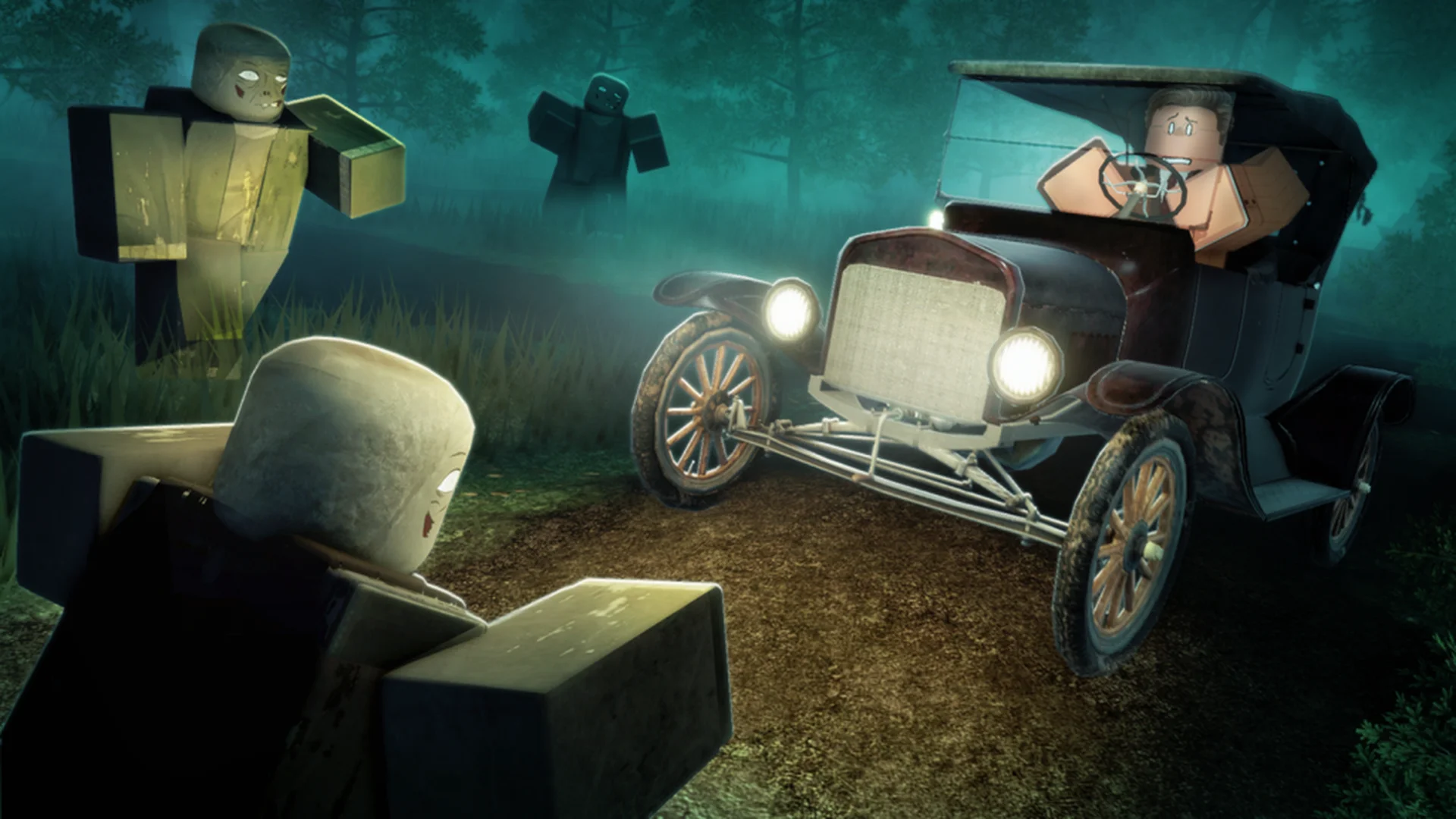
- Road to Ruin tips and tricks focus on preparation, team spacing, resource control, and careful retreats.
- Vehicle management matters because fuel, storage, repairs, and regrouping affect the whole team.
- Best loot rule: carry essential supplies first, then keep space for objective items and high-value discoveries.
- Combat priority: avoid unnecessary fights, protect the route back, and focus on threats that can reach teammates.
- Alpha reminder: map layouts, enemy behavior, and resource values may change during 2026 updates.
Road to Ruin Tips and Tricks for Your First Run
Road to Ruin is a Roblox multiplayer survival horror experience built around preparing a vehicle, traveling through dangerous areas, searching for supplies, and keeping the team alive. The safest opening strategy is simple: prepare together, search nearby locations first, and avoid turning every encounter into a prolonged fight.
The game rewards teams that treat the journey as one shared objective. A player who collects valuable loot but gets separated can create more risk than value. Before leaving the vehicle, decide who leads movement, who searches, who watches for threats, and who manages shared supplies.
Route Lead
- Sets the travel direction
- Calls regroup points
- Decides when to advance or retreat
Scavenger
- Searches nearby locations
- Prioritizes useful supplies
- Returns before inventory becomes crowded
Combat Guard
- Watches exposed approaches
- Responds to hostile encounters
- Protects separated teammates
Support Runner
- Tracks team supplies
- Helps recover separated players
- Keeps the vehicle and group connected
| Opening Priority | Recommended Action | Common Mistake |
|---|---|---|
| Team readiness | Confirm health, inventory space, supplies, and destination | Leaving while one player is still unprepared |
| Vehicle status | Check shared travel resources before departure | Treating fuel and storage as personal property |
| Search order | Explore nearby areas before long detours | Wandering without a return route |
| Team formation | Keep players close enough to support one another | Splitting into isolated search groups |
| Fight selection | Engage only when the threat blocks progress | Chasing enemies away from the route |
Use short callouts such as “vehicle,” “low supplies,” “retreat,” and “enemy ahead.” Clear communication is more useful than long explanations during a dangerous encounter.
Step-by-Step Survival Setup
A reliable run begins before the first major search area. Follow this preparation sequence to reduce wasted supplies and keep the group ready for unexpected threats.
Check the Team
Confirm that every player is ready to move, has enough inventory space, and understands the first destination. Do not begin the route while a teammate is still organizing supplies or standing far from the vehicle.
Assign Simple Roles
Choose a route lead, scavenger, combat guard, and support player. Roles do not need to be permanent, but assigning them before departure prevents duplicated searches and unclear decisions.
Set a Search Boundary
Decide how far the team will explore before returning to the vehicle. Nearby buildings and containers should usually be checked before risky side paths or areas with limited escape space.
Protect Inventory Space
Keep room for medical supplies, fuel, ammunition, weapons, and objective-linked items. Low-value duplicates should not fill storage before the group reaches a more important location.
Choose a Retreat Signal
Agree on a short word or message that means the team is leaving. Retreat early when players are separated, supplies are low, or the route back is becoming unsafe.
| Preparation Task | Why It Matters | Best Timing |
|---|---|---|
| Assign roles | Reduces confusion during searches and combat | Before leaving the vehicle |
| Confirm the route | Prevents aimless travel and unnecessary exposure | Before entering a new area |
| Reserve storage | Makes room for high-value finds and objectives | Before every scavenging stop |
| Redistribute supplies | Keeps essential resources from staying with one player | At the vehicle or a safe checkpoint |
| Check escape space | Gives the team a fallback option during combat | Before triggering a dangerous encounter |
The most expensive mistake is staying in a dangerous area after the original objective is already complete. If the team has secured essential supplies, return to the vehicle instead of searching every possible corner.
Loot, Vehicle, and Resource Management
Road to Ruin places pressure on shared resources rather than individual inventory alone. Food, medical supplies, fuel, weapons, ammunition, and miscellaneous materials should be judged by the next route section, the team’s condition, and the amount of storage available.
The vehicle is also a regroup point. Return to it regularly to unload important items, review the next destination, and prevent one player from carrying the group’s entire supply reserve.
| Resource Category | Carry Priority | Use Guidance | Team Rule |
|---|---|---|---|
| Food | High on long routes | Use when the team can benefit from meaningful recovery | Share across players instead of stacking it on one person |
| Medical supplies | Very high | Reserve for serious injuries and dangerous transitions | Distribute when possible so one defeat does not remove the healing reserve |
| Fuel | High when travel depends on it | Spend after confirming the next movement objective | Assign one player to track shared fuel |
| Weapons | High for combat roles | Equip reliable options before entering danger areas | Match weapons to team roles instead of duplicating every loadout |
| Ammunition | Very high for ranged strategies | Save for confirmed threats and high-pressure encounters | Transfer spare rounds to the player who needs them most |
| Miscellaneous resources | Medium, rising for objectives | Keep items tied to active objectives | Discard duplicates only when essential space is needed |
Carry First
Medical supplies, fuel, ammunition, and objective items should usually take priority over common duplicates.
Use Carefully
Food and healing items are more valuable when used at the right threshold rather than immediately after pickup.
Return Often
Unload shared resources at the vehicle before beginning another long search or dangerous detour.
Before picking up an item, ask whether it improves immediate survival, supports the next objective, or is worth the inventory space. If the answer is unclear, leave room for a better discovery.
Combat, Routes, and Retreat Decisions
Combat should support progression, not replace it. Standard hostile encounters become more manageable when the team stays together, keeps a retreat path open, and focuses on the threat that can reach the group first.
Higher-pressure groups and boss-level encounters require more preparation. Save ammunition and medical supplies for situations where the team cannot simply disengage. Avoid triggering a major encounter while players are separated or carrying unprotected objective items.
| Encounter Type | Danger | Recommended Response | Avoid |
|---|---|---|---|
| Standard hostile encounter | Moderate | Focus the nearest threat and keep a retreat path | Chasing enemies away from the route |
| Special enemy group | High | Hold a defensible position and regroup before looting | Splitting damage across too many targets |
| Boss-level encounter | Very high | Prepare health, ammunition, roles, and escape space | Starting the fight with depleted supplies |
| Environmental threat | Variable | Scout slowly and preserve formation | Rushing into narrow or low-visibility areas |
A route should balance safety, reward, and exposure. Safer paths may provide fewer discoveries but preserve the supplies needed for later objectives. High-yield detours can be worthwhile when the team has enough health, storage, ammunition, and time to return safely.
Before Entering a Dangerous Area:
- Confirm every teammate is within supporting distance
- Check health, ammunition, medical supplies, and inventory space
- Identify the nearest retreat path or vehicle location
- Decide who leads, who guards, and who carries objective items
- Agree on the signal for regrouping or retreat
If the team cannot explain how it will leave an area after the next encounter, the group is probably not ready to enter it.
Co-op Strategies for Public Servers and Fixed Teams
Co-op success depends on consistent habits more than complicated tactics. Fixed groups can assign permanent responsibilities, while public-server players should use visible, simple decisions that other teammates can understand quickly.
Keep the group within supporting distance during movement and combat. When someone becomes separated, stop and confirm their location before continuing. A rescue attempt should be planned rather than rushed, especially if the route between the vehicle and the missing player is already dangerous.
| Team Situation | Best Approach | Priority |
|---|---|---|
| Fixed four-player group | Use dedicated route, scavenging, combat, and support roles | Consistent communication |
| Small team | Combine route leadership with supply management | Avoid unnecessary detours |
| Public server | Use short callouts and stay near the vehicle | Make plans easy to follow |
| Separated teammate | Confirm location, route safety, and rescue value | Do not split the whole team |
| Low-supply run | Skip optional fights and return with essentials | Preserve the ability to continue |
Strong teams also establish a shared inventory policy:
- Announce valuable finds before keeping them.
- Return fuel, medical supplies, and objective items to the vehicle when possible.
- Avoid taking duplicate low-value items while a teammate lacks an essential resource.
- Wait at route points for slower players.
- Leave dangerous areas together instead of retreating individually.
In a public server, do not assume every player understands a complex plan. Use direct instructions, mark the vehicle as the regroup point, and prioritize actions that protect the entire group.
Alpha Notes and Road to Ruin FAQ
Road to Ruin is in Alpha during 2026, so strategies should be treated as version-aware rather than permanent rules. Map structure, enemy pressure, resource placement, vehicle systems, and route objectives may change as updates are released.
For the latest game access information, use the Road to Ruin Roblox search page. The available game listing also describes the experience as a multiplayer survival horror game focused on vehicles, scavenging, cooperation, and dangerous encounters; see the Road to Ruin listing on Medal.
| Alpha Change Area | What Players Should Recheck |
|---|---|
| Map updates | Road nodes, side paths, supply locations, and escape routes |
| Enemy updates | Spawn conditions, pressure level, attack behavior, and encounter spacing |
| Loot changes | Carry priority, item scarcity, and useful storage choices |
| Vehicle changes | Fuel needs, storage capacity, travel behavior, and repair requirements |
| Objective changes | Activation conditions, required items, and return routes |
Q: What are the most important Road to Ruin tips and tricks for beginners?
Prepare at the vehicle, assign simple team roles, search nearby areas first, protect inventory space, and retreat before the group becomes separated or depleted.
Q: Should every encounter be fought?
No. Fight when a threat blocks progress or places the team at immediate risk. Avoid unnecessary engagements when the group can preserve supplies and use a safer route.
Q: What should I carry first during a scavenging run?
Prioritize medical supplies, fuel when travel requires it, ammunition for the team’s combat plan, useful weapons, and items connected to the active objective.
Q: How should teams handle Road to Ruin Alpha updates?
Recheck routes, resource priorities, enemy behavior, and vehicle requirements after major 2026 updates. Alpha changes can make older strategies less reliable.
Do not assume a route, item priority, or enemy response will remain unchanged throughout Alpha development. Reevaluate the plan after major updates and keep the team’s strategy flexible.