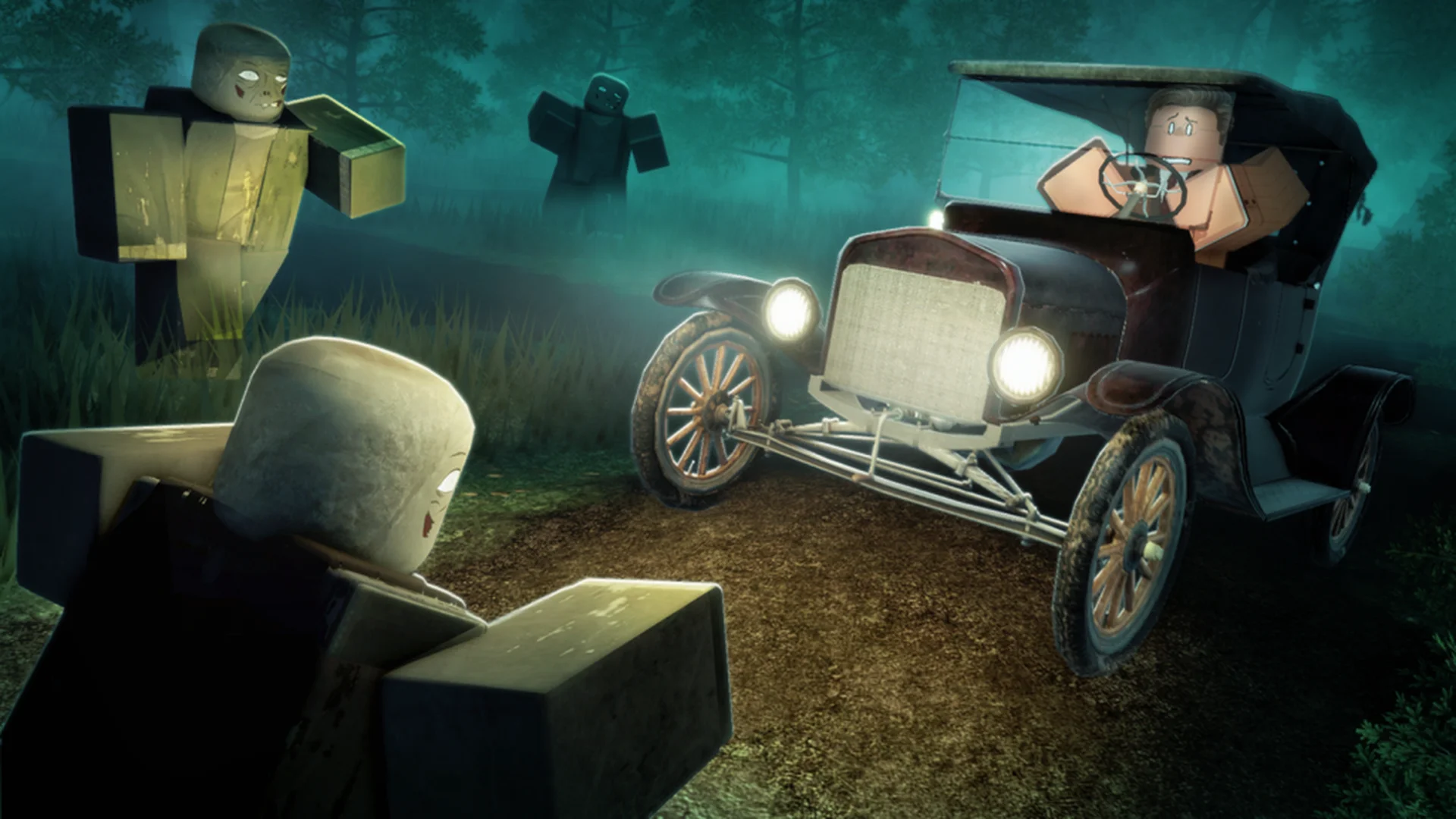
- Road to Ruin how to play basics center on preparation, travel, scavenging, and team survival.
- Prepare the vehicle and shared supplies before leaving the starting area.
- Search with a route instead of wandering away from the vehicle.
- Share resources and keep teammates within supporting distance.
- Retreat early when supplies, health, or team spacing become unsafe.
Road to Ruin How to Play: Core Gameplay Loop
Road to Ruin is a Roblox multiplayer survival horror game set on a cursed 1930s road. The main gameplay loop combines vehicle travel, resource scavenging, enemy encounters, and cooperative decision-making. The Alpha version emphasizes reaching objectives with enough health and supplies to continue the journey.
The safest approach is to treat every road section as a preparation problem. Before moving, check the vehicle, inventory, team condition, and next destination. During exploration, collect useful resources without carrying unnecessary items or separating too far from the group.
Before leaving the vehicle, assign a route lead, a scavenger, and a player responsible for watching supplies or regrouping. Simple roles reduce duplicated searches and make danger easier to manage.
| Gameplay Phase | Main Goal | Common Mistake | Better Approach |
|---|---|---|---|
| Preparation | Check supplies, vehicle, and team readiness | Leaving immediately with limited resources | Confirm health, fuel, medical items, weapons, and inventory space |
| Travel | Reach the next road section safely | Splitting up or taking unnecessary detours | Move together and keep a clear return route |
| Scavenging | Secure useful items for current and future objectives | Picking up every low-value item | Prioritize survival supplies and objective-linked resources |
| Encounters | Survive enemies without wasting resources | Fighting while separated or overextended | Keep an escape path and retreat when the fight stops being efficient |
| Regrouping | Return to the vehicle and redistribute supplies | Keeping essential items on one player | Unload, share, and prepare for the next section |
Prepare
- Check vehicle condition and available supplies
- Leave room for valuable discoveries
- Confirm every teammate is ready
Explore
- Search nearby locations first
- Remember the vehicle’s position
- Use a short, repeatable route
Survive
- Avoid unnecessary fights
- Protect injured teammates
- Keep an escape route available
Regroup
- Return before the team is overloaded
- Share food, medical items, and ammunition
- Confirm the next objective together
The official Road to Ruin Roblox search listing is the safest starting point for locating the current Alpha experience. The public Road to Ruin experience information describes the game around vehicles, supplies, cooperation, and hostile encounters.
Step-by-Step First Journey Setup
A successful first journey begins before the group reaches its first dangerous location. Use the following sequence to establish a repeatable routine. It works particularly well for new players joining a public server because each step gives the team a clear responsibility.
Road to Ruin is in Alpha, so map layouts, item values, enemy behavior, and progression systems may change. Recheck route information after major updates instead of relying on an older run.
Check the Team and Vehicle
Confirm that all players are ready, then inspect the available vehicle and shared resources. Make sure the group has enough supplies for the planned distance and that no player is carrying all of the important items.
Assign Simple Team Roles
Choose one player to lead movement, one to focus on scavenging, and one to watch supplies or support separated teammates. In larger groups, add a combat guard who stays near vulnerable players.
Choose a Search Order
Start with nearby locations and work outward from the vehicle. Search the safest accessible areas first, then decide whether the extra loot is worth entering a more dangerous location.
Return Before Overextending
Go back to the vehicle when inventory space is limited, the team is injured, or the route becomes difficult to defend. Returning with useful supplies is better than losing progress while chasing one more item.
Redistribute and Continue
Unload shared supplies, transfer ammunition or medical items to the players who need them, and confirm the next destination. Do not begin the next road section until the group has a clear plan.
| Preparation Check | Recommended Status | Why It Matters |
|---|---|---|
| Team health | Stable enough for the next section | A weakened player can make every encounter more dangerous |
| Vehicle readiness | Confirmed before departure | Travel and regrouping depend on reliable vehicle access |
| Inventory space | Several open slots | Empty space lets the team collect higher-value discoveries |
| Medical supplies | Distributed when possible | One defeated player should not remove the entire healing reserve |
| Ammunition | Matched to the planned danger | Spending ammunition early can weaken the team later |
| Route decision | Safe route or high-yield route selected | The group should understand the expected risk before moving |
A clear routine also helps public-server teams. Use short callouts such as “vehicle,” “searching,” “retreating,” or “enemy ahead.” Long explanations are less useful during an encounter than concise information that tells teammates what to do next.
Resource Management and Team Roles
Resource management is one of the most important parts of learning how to play Road to Ruin. Food, medical supplies, fuel, weapons, ammunition, and miscellaneous objective items should be judged by timing rather than collected automatically. The best item is the one that supports the next important decision.
Treat essential supplies as team resources. Announce valuable finds, distribute medical items when possible, and return objective-linked materials to the vehicle instead of hiding them in one player’s inventory.
| Resource Category | Carry Priority | Best Use | Team Rule |
|---|---|---|---|
| Food | High on long routes | Use when the recovery will provide meaningful value | Share across players instead of stacking it on one character |
| Medical supplies | Very high | Reserve for serious injuries or dangerous transitions | Keep healing available on more than one player |
| Fuel | High when travel requires it | Spend when the next movement objective depends on the vehicle | Assign one player to track fuel decisions |
| Weapons | High for combat roles | Equip before entering a known danger area | Avoid giving every player the same combat function |
| Ammunition | Very high for ranged builds | Use on confirmed or high-risk threats | Transfer spare rounds to the most important weapon user |
| Miscellaneous resources | Medium, rising for objectives | Keep items tied to active progression | Drop low-value duplicates only when space is needed |
Survival Lead
- Controls movement and retreat decisions
- Watches for route hazards
- Keeps the team from spreading too far
Scavenger
- Searches nearby containers and buildings
- Prioritizes useful resources
- Returns to the vehicle before overloading
Combat Guard
- Stays near exposed teammates
- Responds to enemy pressure
- Protects the retreat path during regrouping
A fourth role, the support runner, is especially helpful in public servers. This player tracks separated teammates, carries shared supplies, and helps the group return safely after a search. Formal classes may develop as the Alpha continues, but these practical roles provide a useful structure in the current version.
Use this priority order when inventory space is limited:
- Items required for immediate survival or the next objective.
- Medical supplies and ammunition needed for an expected encounter.
- Fuel or travel resources required for continued movement.
- Food and general supplies for later road sections.
- Miscellaneous duplicates that can be abandoned if storage becomes crowded.
Combat, Retreats, and Route Choices
Combat should support the journey rather than replace it. Road to Ruin rewards teams that recognize when an encounter is worth taking and when retreating protects more value. Before engaging, check whether the group has enough health, ammunition, distance, and space to withdraw.
Before starting an encounter, identify where the team will retreat. If players are separated, the group is low on supplies, or the route is difficult to defend, disengaging may be safer than extending the fight.
| Encounter Type | Danger Level | Recommended Response | Avoid |
|---|---|---|---|
| Standard hostile encounter | Moderate | Focus the nearest threat and maintain distance | Chasing enemies away from the route |
| Special enemy group | High | Hold a defensible position and regroup | Looting while enemies still apply pressure |
| Boss-level encounter | Very high | Prepare health, ammunition, roles, and escape space | Triggering the encounter without reserves |
| Environmental threat | Variable | Scout slowly and keep the formation compact | Rushing into restricted or low-visibility areas |
Use the route structure below to balance safety and rewards:
| Route Stage | Safer Option | Higher-Yield Option | Main Risk |
|---|---|---|---|
| Starting node | Leave after checking essentials | Search the entire area | Delaying too long or overloading the team |
| Scavenging area | Loot accessible containers | Search side areas and secondary locations | Separation and prolonged exposure |
| Supply point | Refill only necessary categories | Restock broadly before a risky route | Spending resources too early |
| Dangerous segment | Move together and avoid optional fights | Explore contested side paths | Losing health and ammunition |
| Objective area | Activate after checking escape options | Search nearby areas before activation | Starting a major encounter unprepared |
Keep the team compact during dangerous sections. The combat guard should not chase a threat far away, while the scavenger should avoid entering a new area without telling the group. If one player becomes separated, stop advancing until the team understands the player’s location and condition.
For route planning, compare the reward against the cost:
- Safe routes preserve health, ammunition, and travel time.
- High-yield routes may provide better resources but increase exposure.
- Detours are more attractive when the team needs a specific item.
- Retreats become more valuable after the main objective is complete.
- Vehicle returns should happen before storage, health, or communication breaks down.
Beginner Checklist and FAQ
Use this checklist before each journey and again before activating a major objective. Repeating the same checks reduces preventable failures and makes the Alpha gameplay loop easier to learn.
The strongest beginner improvement is consistency: prepare, search nearby areas, return to the vehicle, redistribute supplies, and only then commit to the next danger section.
First Journey Checklist:
- Check team health, vehicle readiness, and available inventory space
- Assign a route lead, scavenger, combat guard, or support role
- Prioritize food, medical supplies, fuel, weapons, and ammunition
- Search close locations before taking longer or riskier detours
- Return to the vehicle and redistribute supplies before continuing
| Situation | Immediate Decision | Reason |
|---|---|---|
| Inventory is nearly full | Return and unload | Preserves space for higher-value items |
| One player is badly injured | Pause or retreat | Protects the group from a sudden collapse |
| The team is separated | Regroup before advancing | Prevents isolated players from facing pressure alone |
| Ammunition is running low | Avoid optional fights | Saves resources for required encounters |
| The objective is complete | Evaluate the return route | Extra exploration may no longer justify the risk |
Q: What is the basic way to play Road to Ruin?
Prepare the vehicle and team, travel through dangerous road sections, search for supplies, manage shared resources, survive encounters, and complete objectives together.
Q: What should beginners do first in Road to Ruin?
Check health, vehicle readiness, inventory space, and essential supplies. Then assign simple team roles and search nearby locations before taking longer detours.
Q: Should I fight every enemy I see?
No. Fight when the encounter protects an objective or blocks safe progress. Avoid unnecessary battles when the team is separated, injured, or low on ammunition.
Q: How should a team manage loot?
Treat essential items as shared resources. Announce valuable finds, distribute medical supplies and ammunition, keep objective items safe, and return to the vehicle before storage becomes crowded.
The game remains in Alpha as of October 25, 2026. For current access information, use the Road to Ruin Roblox listing and review the latest available experience details before planning a route.