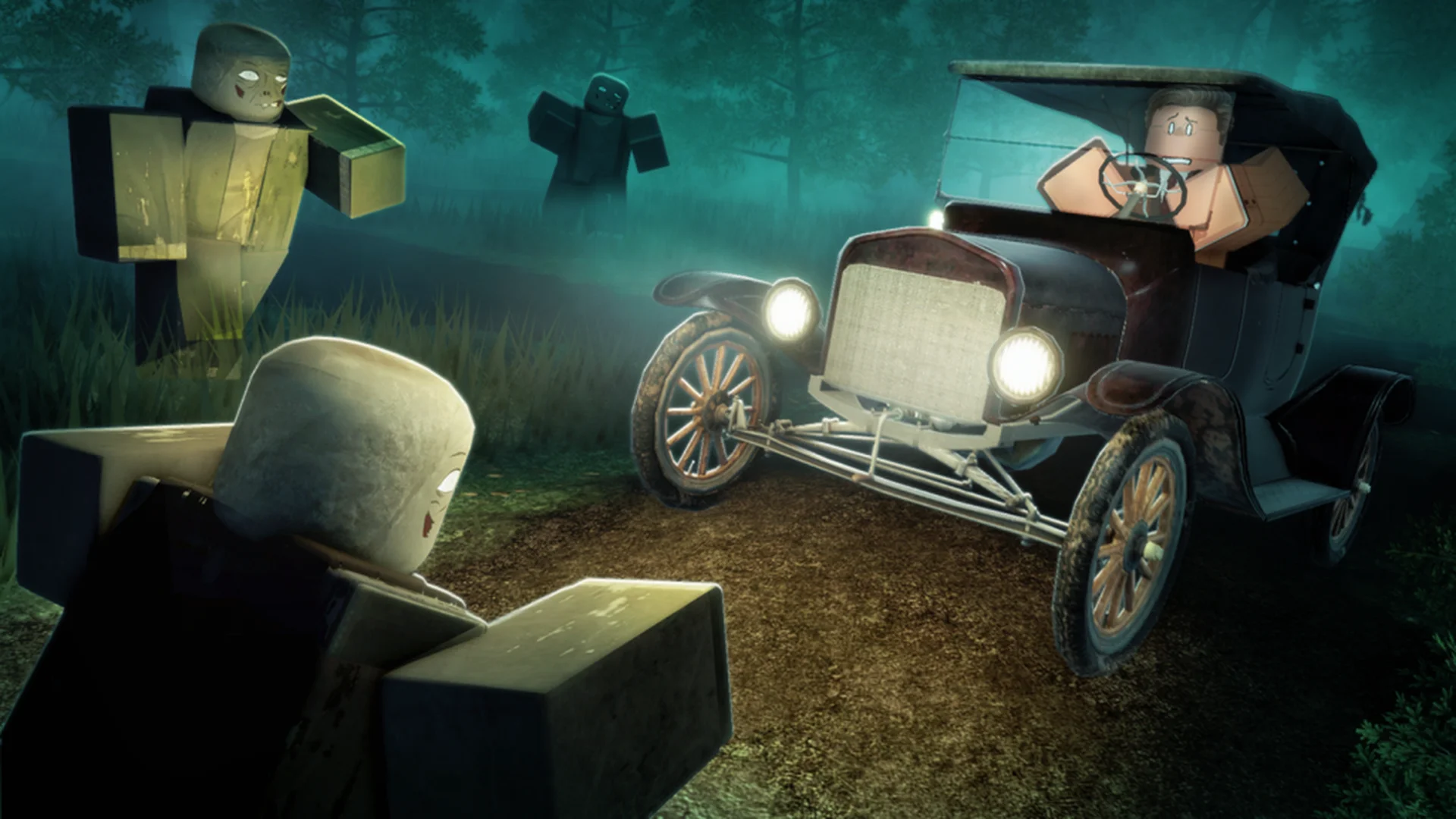
- Road to Ruin beginners guide: Prepare the vehicle, search nearby locations, and travel with a clear return plan.
- First priority: Protect fuel, medical supplies, ammunition, and inventory space before collecting low-value loot.
- Best habit: Stay close to teammates and regroup at the vehicle after each search area.
- Combat rule: Fight only when the encounter protects progress or blocks the route.
- Alpha reminder: Recheck routes, enemies, and resource priorities after major updates.
Road to Ruin Beginners Guide: Core Loop
Road to Ruin is a Roblox multiplayer survival horror co-op experience set on a dangerous 1930s road. The main loop is simple: prepare the vehicle, collect supplies, travel through hostile areas, manage limited resources, and complete objectives without separating the team.
New players usually lose runs because they leave without preparation, carry too many weak items, or continue exploring after the group has already reached its safe limit. A successful journey is less about collecting everything and more about making controlled decisions.
Prepare
- Check health and supplies
- Confirm the vehicle is ready
- Leave inventory space open
Scavenge
- Search nearby locations first
- Prioritize survival items
- Return before danger escalates
Regroup
- Share essential resources
- Confirm the next objective
- Travel as one team
| Priority | What to Check | Beginner Standard |
|---|---|---|
| Vehicle | Fuel, condition, storage | Ready before departure |
| Supplies | Food, medical items, ammunition | Carry essentials first |
| Team | Roles, route, retreat plan | Everyone confirms readiness |
| Inventory | Open slots and shared items | Keep room for valuable loot |
Treat the vehicle as the team’s mobile base. Return to it often to unload supplies, redistribute equipment, and reset the group before continuing.
Step-by-Step First Journey Setup
Follow this process before and during your first several runs. It keeps the team moving while limiting unnecessary fights and inventory problems.
Inspect the Vehicle
Check the vehicle, available fuel, storage space, and the next travel objective. Do not leave until the group understands where it is going and when it will return.
Assign Simple Team Roles
Choose a route lead, scavenger, combat guard, and support runner when possible. These are practical responsibilities rather than confirmed permanent classes.
Search the Closest Area
Start with nearby buildings or containers. Learn the route while keeping the vehicle within reach, and avoid long detours before the team understands local dangers.
Sort Supplies at the Vehicle
Keep medical items, fuel, ammunition, and objective materials organized. Leave low-value duplicates behind when storage becomes limited.
Choose Advance or Retreat
Continue only when the team has enough supplies and a clear route forward. Retreat when players are separated, weakened, or carrying valuable loot.
| Journey Stage | Main Action | Common Mistake |
|---|---|---|
| Departure | Confirm vehicle and roles | Leaving before everyone is ready |
| First search | Take essential supplies | Filling inventory with duplicates |
| Regroup | Unload and redistribute | Keeping shared items privately |
| Danger area | Move together and conserve ammo | Chasing enemies too far |
| Objective | Prepare an escape route | Triggering danger without recovery supplies |
The first search area is not a reason to empty every container. If the team is already carrying essentials, return to the vehicle instead of risking the entire run for minor loot.
Items, Loot, and Vehicle Management
Resource management decides how far a team can travel. Food, medical supplies, fuel, weapons, ammunition, and objective materials should be judged by immediate need, remaining route length, and upcoming danger.
| Category | Carry Priority | Best Use |
|---|---|---|
| Food | High on long routes | Use when the team gains meaningful recovery |
| Medical supplies | Very high | Save for serious injuries and dangerous transitions |
| Fuel | High when travel requires it | Spend after confirming the next destination |
| Weapons | High for combat players | Equip reliable options before danger areas |
| Ammunition | Very high for ranged teams | Reserve for confirmed or high-risk threats |
| Objective items | High during active tasks | Protect until the related objective is complete |
Keep shared resources distributed when possible. If one player carries all medical supplies or ammunition, a single defeat can remove the team’s recovery plan. Assign one player to track fuel and another to monitor shared healing items.
Keep
Medical supplies, fuel, ammunition, objective-linked items, and reliable weapons.
Use Carefully
Food, healing items, ammunition, and fuel should match the next route section.
Leave Behind
Low-value duplicates, unnecessary materials, and items that block essential storage.
Before leaving a location, ask three questions: Can the team keep moving, can it survive the next threat, and is there enough room for a better discovery?
Co-op Roles, Combat, and Route Choices
Road to Ruin rewards teams that communicate clearly. A balanced group does not require a formal class system; it needs players who accept different responsibilities and avoid duplicating the same task.
| Role Focus | Main Responsibility | Best Practice |
|---|---|---|
| Survival Lead | Route control and team safety | Decide when to advance, fight, or retreat |
| Scavenger | Loot collection and storage | Return valuable items before overextending |
| Combat Guard | Threat response | Protect weaker players and hold the retreat path |
| Support Runner | Recovery and regrouping | Track separated teammates and shared supplies |
Use short callouts such as “vehicle,” “returning,” “enemy left,” or “falling back.” Long explanations during combat can slow the team, while simple repeated terms keep everyone aware of movement and danger.
Fight
Engage when an enemy blocks the objective, threatens the vehicle, or can be handled without exhausting key supplies.
Avoid
Skip encounters that offer no progress and pull the team away from its route.
Retreat
Fall back when players are split, resources are low, or the group has already secured valuable loot.
| Route Choice | Reward | Risk |
|---|---|---|
| Safe route | Lower exposure and steadier progress | Fewer extra supplies |
| Nearby detour | More loot with manageable travel | More time away from the vehicle |
| High-yield area | Better chance of valuable resources | Greater enemy pressure and resource cost |
| Objective push | Faster progression | Failure can cost the entire run |
Do not chase an enemy away from the group. The safest formation keeps the route lead, scavenger, and support player close enough for the combat guard to respond.
Alpha Run Checklist and FAQ
Use this checklist before each departure and after every major stop. Because Road to Ruin is in Alpha, treat route details, item priorities, and enemy behavior as systems that may change between updates.
Before You Leave:
- Check vehicle readiness, fuel, storage, and travel objective
- Assign route, scavenging, combat, and support responsibilities
- Carry medical supplies, ammunition, food, and other essential resources
- Leave inventory space for valuable or objective-linked items
- Agree on regroup and retreat signals before entering danger
| Checkpoint | Question | Correct Action |
|---|---|---|
| Departure | Is everyone ready? | Delay movement until roles and route are clear |
| Search area | Is the loot worth the risk? | Take essentials and leave low-value duplicates |
| Vehicle | Are supplies organized? | Unload, redistribute, and prepare the next push |
| Combat | Does fighting advance the run? | Engage only when the threat matters |
| Objective | Can the team escape? | Keep recovery items and a retreat path available |
Record which routes, resources, and encounters feel different after updates. A reliable beginner plan should be easy to adjust rather than dependent on one fixed path.
Q: What should beginners do first in Road to Ruin?
Inspect the vehicle, confirm the route, assign simple team roles, and search the closest area before attempting longer detours.
Q: Which items matter most during an early run?
Medical supplies, fuel, ammunition, food for long routes, reliable weapons, and objective-linked materials should generally come before low-value loot.
Q: Should a new team fight every enemy?
No. Fight when an enemy blocks progress or threatens the group. Avoid unnecessary encounters that consume supplies or pull players away from the vehicle.
Q: Is there a fixed class system in the Alpha version?
The available information supports practical team roles such as Survival Lead, Scavenger, Combat Guard, and Support Runner rather than a confirmed permanent class system.
Useful starting points include the Road to Ruin Roblox search page and the available Road to Ruin experience listing.