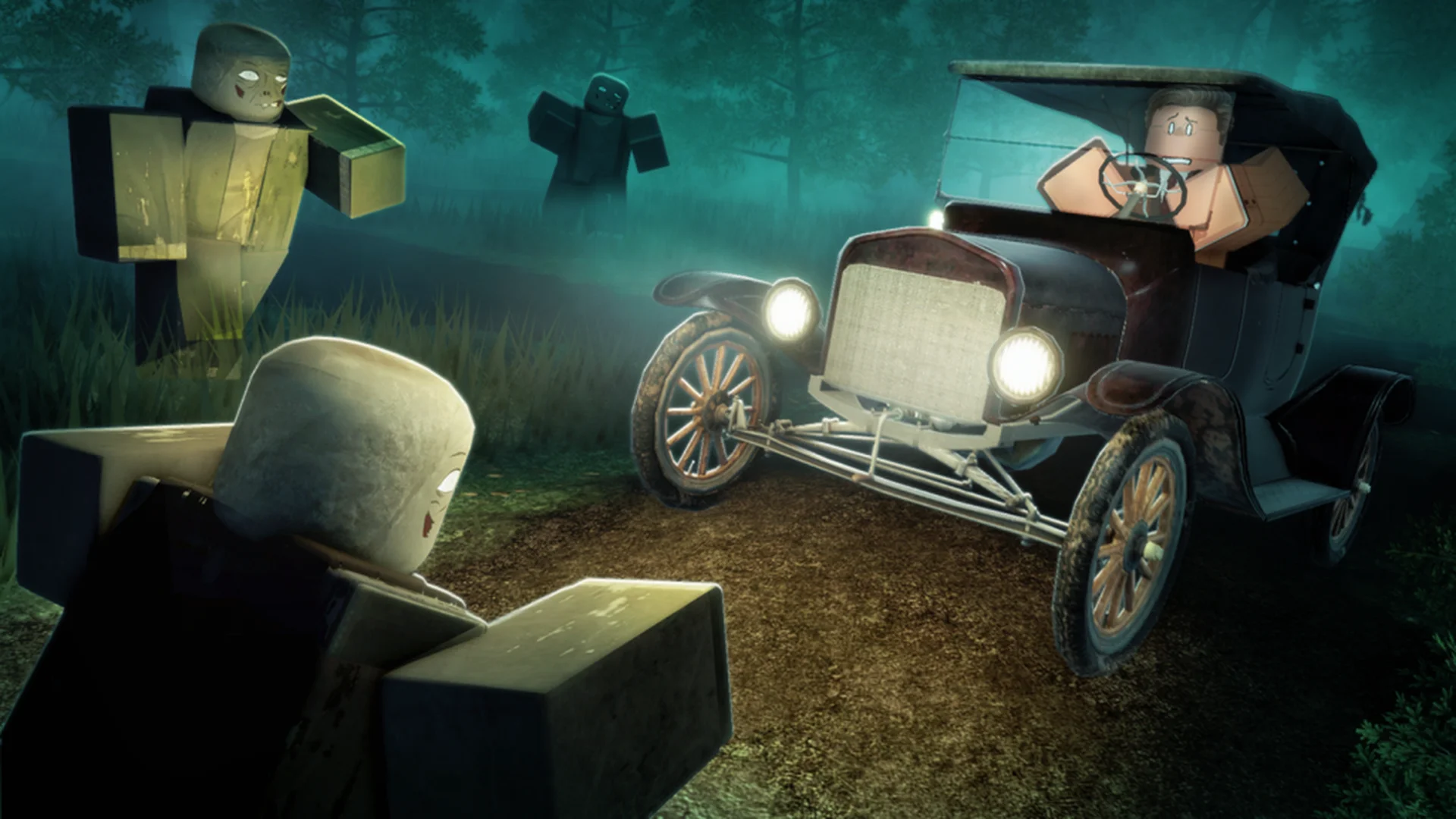
- Road to Ruin gameplay centers on vehicle travel, scavenging, combat, and cooperative survival.
- Prepare first by checking supplies, inventory space, vehicle readiness, and team responsibilities.
- Search efficiently by following a planned route and returning to the vehicle before danger escalates.
- Fight selectively because retreating with valuable supplies can be better than extending a risky encounter.
- Stay together during travel, combat, rescues, and major objective areas.
Road to Ruin Gameplay: Core Survival Loop
Road to Ruin gameplay is built around preparing a vehicle, traveling through dangerous road sections, searching for supplies, handling enemy encounters, and completing objectives as a team. The game is currently described as a Roblox multiplayer survival horror experience in Alpha, with a 1930s road setting and a strong focus on cooperative movement.
The safest approach is to treat every journey as a shared expedition rather than a collection of individual loot runs. Fuel, medical supplies, ammunition, storage capacity, travel time, and vehicle access all affect the entire group.
| Gameplay Stage | Main Objective | Common Risk | Recommended Priority |
|---|---|---|---|
| Preparation | Ready the vehicle, inventory, and team | Leaving without essential supplies | Confirm health, storage, fuel, and roles |
| Travel | Reach the next road section safely | Separating from teammates | Keep a compact formation |
| Scavenging | Collect useful resources and objective items | Overstaying in exposed areas | Search nearby locations first |
| Combat | Control threats without wasting supplies | Chasing enemies too far | Use focused attacks and clear retreat paths |
| Progression | Complete the route objective | Triggering danger while unprepared | Regroup before advancing |
The vehicle is more than transportation. It is a regrouping point, a shared storage location, and a reference point for navigation. Before entering a building or side area, make sure every player understands where the vehicle is parked and how to return to it.
Preparation
- Check supplies before departure
- Keep inventory space available
- Confirm the next objective
Scavenging
- Search close areas first
- Prioritize essential resources
- Return before storage becomes a problem
Team Survival
- Assign simple responsibilities
- Use short threat callouts
- Retreat and regroup together
Treat the vehicle as the team’s anchor. If players lose track of it, route planning, resource sharing, and emergency retreats become much harder.
Step-by-Step Road to Ruin Gameplay Guide
A reliable run follows a repeatable sequence. The exact map layout, enemy behavior, and resource placement may change during Alpha development, but the preparation and decision-making principles remain useful across different journeys.
Prepare Before Leaving
Check the team’s health, available supplies, inventory space, weapons, ammunition, fuel, and vehicle condition. Do not fill every inventory slot with low-value items before the journey begins. Leave room for objective materials and better discoveries.
Assign Team Responsibilities
Choose simple roles such as route lead, scavenger, combat guard, and support runner. These are practical team positions rather than confirmed permanent classes. Clear responsibilities reduce duplicated searches and make public-server cooperation easier.
Follow a Planned Search Route
Start with nearby locations and search them in a clear order. Keep the return route visible, remember the vehicle’s position, and avoid sending every player in a different direction. A shorter route with essential supplies is often safer than an uncontrolled detour.
Decide Whether to Fight or Retreat
Call out enemies before engaging and check whether the team has enough health, ammunition, and escape space. Fight when the encounter protects the route or objective. Retreat when the group is split, carrying valuable loot, or running low on supplies.
Regroup Before the Next Objective
Return to the vehicle or another safe checkpoint, redistribute shared resources, and confirm that every player is ready. Major objectives should not be activated while teammates are still searching, healing, or returning from a side area.
| Decision Point | Safer Choice | Higher-Risk Choice |
|---|---|---|
| Search route | Nearby locations in sequence | Multiple distant detours |
| Inventory | Essential supplies and open slots | Carrying every low-value item |
| Enemy encounter | Focused engagement with retreat space | Chasing threats away from the group |
| Teammate rescue | Confirm location and route first | Running out alone without communication |
| Major objective | Regroup and prepare beforehand | Activating while the team is separated |
Road to Ruin is in Alpha, so maps, enemy behavior, item locations, and progression systems can change. Recheck route assumptions after major updates instead of treating one successful path as permanent.
Team Roles, Loot Priorities, and Vehicle Management
A balanced group does not require a confirmed class system. Instead, players can use flexible roles that match the needs of the current route. This approach works for fixed teams and public servers because each position has a clear purpose without requiring specialized character rules.
| Team Role | Primary Focus | Best Contribution |
|---|---|---|
| Survival Lead | Movement and route control | Calls advances, pauses, and retreats |
| Scavenger | Loot and storage efficiency | Finds valuable supplies and objective items |
| Combat Guard | Threat response | Protects players during dangerous sections |
| Support Runner | Recovery and coordination | Tracks separated teammates and shared supplies |
Food, medical supplies, fuel, weapons, ammunition, and miscellaneous resources should not all receive the same priority. The correct choice depends on the remaining route, the condition of the group, and the next known danger.
| Resource Category | Carry Priority | Use Guidance |
|---|---|---|
| Food | High on long routes | Save for meaningful recovery or continued travel |
| Medical supplies | Very high | Reserve for serious injuries and dangerous transitions |
| Fuel | High when travel requires it | Assign responsibility and confirm the next destination |
| Weapons | High for combat roles | Equip reliable options before danger areas |
| Ammunition | Very high for ranged strategies | Track supplies before major encounters |
| Miscellaneous resources | Medium, or high for objectives | Keep items linked to active tasks |
Vehicle management should remain a team responsibility. One player can track fuel while another manages medical supplies, but all important decisions should be communicated before the group leaves a checkpoint.
Route Lead
Controls movement, checks danger, and decides when the team should regroup.
Loot Runner
Searches nearby areas, compares item value, and protects inventory space.
Combat Guard
Watches exposed positions, responds to threats, and avoids unnecessary chases.
Support Runner
Carries shared supplies, tracks teammates, and helps stabilize the group.
Announce important finds before claiming them personally. Shared information helps the group decide whether to use, store, transfer, or leave an item.
Combat, Routes, and Enemy Encounters
Enemy encounters become more manageable when the team identifies the threat before committing to a fight. Standard hostile encounters can often be handled by maintaining spacing and focusing on the nearest threat. Larger enemy groups require stronger positioning, while boss-level situations demand preparation and clear role assignments.
| Encounter Type | Danger Level | Recommended Response |
|---|---|---|
| Standard hostile encounter | Moderate | Stay together, focus nearby threats, keep a retreat path |
| Special enemy group | High | Hold a defensible position and avoid splitting damage |
| Boss-level encounter | Very high | Prepare health, ammunition, roles, and escape space |
| Environmental threat | Variable | Scout carefully and slow the team’s movement |
A route should balance progress, loot value, and exposure to danger. Safe routes usually reduce unnecessary combat and preserve supplies. Higher-yield detours may provide more resources, but they can also increase travel time, enemy pressure, and the chance of losing the group’s progress.
| Route Area | Main Purpose | Practical Approach |
|---|---|---|
| Starting road node | Preparation | Check supplies, roles, and the next objective |
| Scavenging area | Resource collection | Search accessible locations and avoid overextending |
| Supply point | Recovery and redistribution | Refill essential categories and protect inventory space |
| Dangerous road segment | Combat transition | Move together and preserve emergency resources |
| Key objective area | Progression | Prepare before activation and protect objective items |
Use terrain, distance, and visibility to limit how many enemies can attack at once. Avoid standing in the open when the route offers cover or a defensible position. If the team is carrying valuable loot, the extraction decision matters as much as the encounter itself.
Before Leaving a Search Area:
- Confirm every teammate knows the vehicle location
- Keep essential supplies and objective items protected
- Check health, ammunition, and available escape space
- Leave low-value duplicates when inventory space is limited
- Tell the team whether the next move is advance, search, or retreat
Do not chase an enemy so far that the team loses its route, vehicle access, or retreat option. Controlling the encounter is usually more valuable than extending it.
Alpha Progression, Updates, and FAQ
The Alpha version should be approached as an evolving survival experience. The initial release establishes the core loop of road travel, scavenging, combat, and objectives, while future updates may adjust map structure, enemy pressure, item availability, seasonal content, or progression requirements.
When reviewing an update, separate permanent systems from temporary events. A seasonal event may introduce limited-time objectives or presentation changes, while balance adjustments can affect the value of weapons, ammunition, medical supplies, fuel, and route detours.
| Update Category | What Players Should Check | Possible Gameplay Effect |
|---|---|---|
| Alpha release | Core route, objectives, items, and encounters | Establishes the baseline experience |
| Seasonal event | Event objectives, rewards, and duration | May change exploration priorities |
| Balance changes | Weapons, supplies, enemies, and travel | Can shift preferred strategies |
| Bug fixes | Objectives, pickups, transitions, and spawning | May improve run consistency |
| Development announcements | Planned systems and future content | Helps separate current features from plans |
Q: What is the main Road to Ruin gameplay loop?
Prepare the vehicle and team, travel through dangerous road sections, scavenge supplies, manage encounters, and complete objectives together.
Q: Is Road to Ruin built around a confirmed class system?
The available Alpha information supports flexible team roles such as Survival Lead, Scavenger, Combat Guard, and Support Runner. Treat these as practical responsibilities rather than permanent classes.
Q: What should beginners prioritize during their first journey?
Check the vehicle, preserve inventory space, search nearby locations first, communicate enemy positions, and return to regroup before the team becomes separated.
Q: Are Road to Ruin maps and strategies permanent?
Not necessarily. Because the game is in Alpha, map layouts, resource locations, enemy behavior, and progression requirements may change after updates.
The strongest survival pattern is simple: prepare together, search with a route, protect shared resources, fight selectively, and regroup before every major decision.