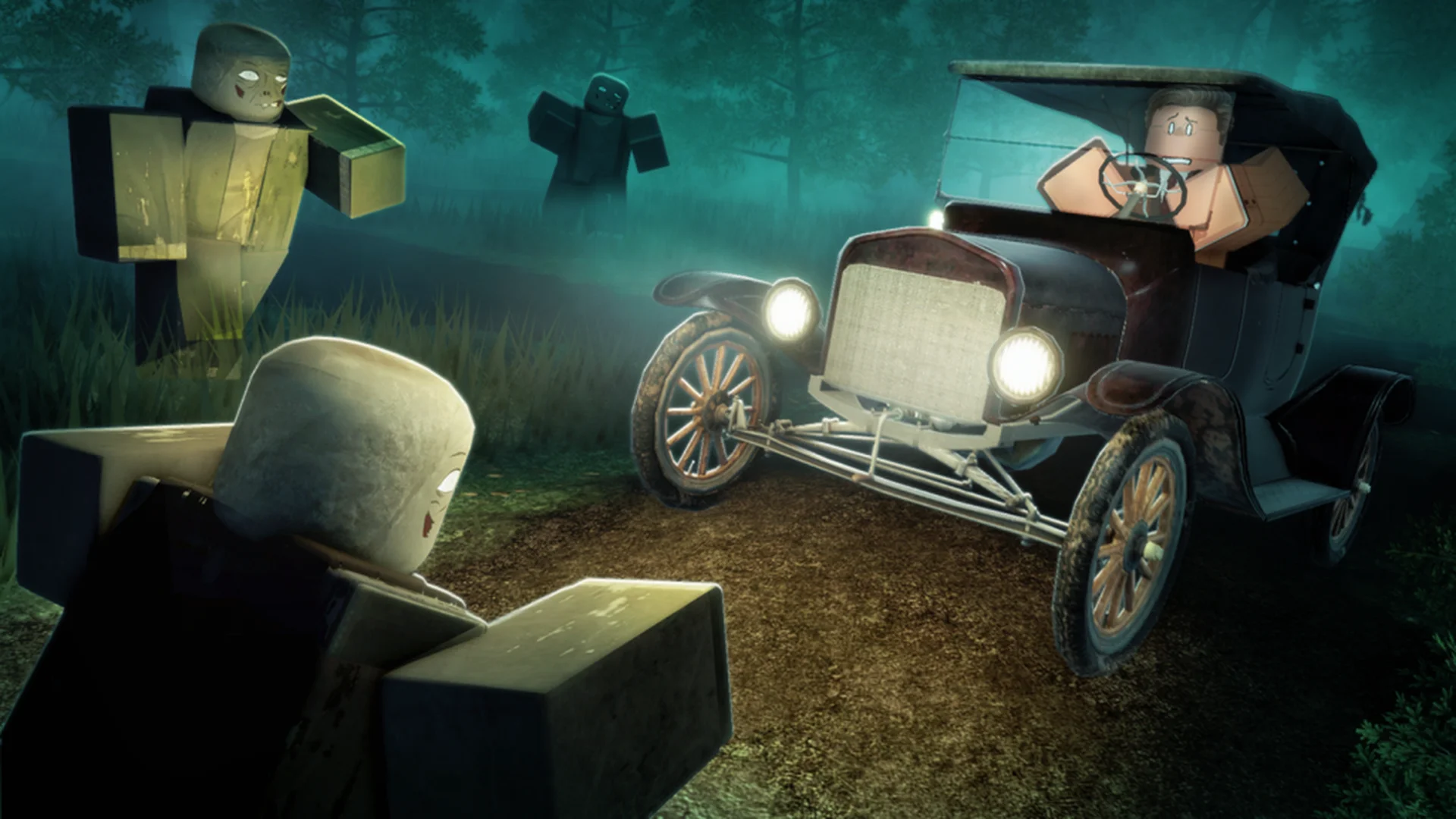
- Road to Ruin alpha centers on vehicle travel, scavenging, survival, and co-op decisions.
- Prepare first by checking supplies, inventory space, vehicle readiness, and team roles.
- Search efficiently by following a planned route and returning to the vehicle regularly.
- Fight selectively because retreating can protect valuable loot and limited resources.
- Alpha changes may affect routes, enemies, items, and progression between updates.
Road to Ruin alpha: Current Survival Loop
Road to Ruin is a Roblox multiplayer survival horror co-op game set around a dangerous 1930s road journey. The current alpha structure emphasizes preparing a vehicle, traveling through hostile areas, searching for supplies, managing limited storage, and keeping the team alive long enough to continue.
The game’s core challenge is not simply defeating enemies. Each decision affects the next section of the route. Spending too much ammunition, separating from the group, or carrying low-value loot can make later encounters harder. A successful run therefore depends on balancing progress, exploration, combat, and withdrawal.
| Core system | What it means | Main priority |
|---|---|---|
| Vehicle travel | The vehicle supports movement, storage, regrouping, and long-distance progress | Keep it supplied and use it as a team checkpoint |
| Scavenging | Locations provide food, medical supplies, fuel, weapons, ammunition, and other resources | Take high-value items first |
| Co-op survival | Players share danger, inventory pressure, and route decisions | Stay coordinated and communicate |
| Enemy encounters | Hostile areas can consume health, ammunition, and time | Fight only when the reward or objective justifies the risk |
| Alpha development | Systems may change as Studio Lumis updates the game | Recheck routes and priorities after major updates |
The available alpha information confirms the importance of vehicles, resource searches, enemy encounters, and group travel. Specific enemy names, fixed map coordinates, official codes, and confirmed class abilities should not be treated as established unless a future game update verifies them.
Road to Ruin is still in Alpha during 2026. Treat exact item locations, enemy behavior, map routes, and role rankings as version-sensitive information.
The official Road to Ruin Roblox search page is the safest starting point for locating the current experience. Players can also review the available Road to Ruin game listing when checking basic public information.
First Journey Setup: Step-by-Step
Your first journey should focus on learning the survival loop rather than collecting every item in sight. Before leaving, decide what the group needs immediately, what can be stored for later, and which areas are safe enough to search.
Check the Vehicle and Team
Begin by confirming that the vehicle is ready for the planned route. Make sure every player understands the departure point, the next objective, and where to regroup after searching. The vehicle should remain the team’s reference point, especially when visibility or enemy pressure makes navigation difficult.
Reserve Inventory Space
Do not fill every inventory slot before the journey begins. Leave room for medical supplies, fuel, ammunition, objective items, and other high-value discoveries. Low-value loot becomes a problem when it prevents the team from carrying something essential.
Assign Simple Responsibilities
Choose a route lead, a scavenger, a combat-focused player, and a flexible support player when the group is large enough. These are practical roles rather than confirmed character classes. Their purpose is to reduce confusion and prevent everyone from making the same decision at once.
Search Nearby Locations First
Start with areas close to the vehicle or the planned route. Nearby searches give the team a safer way to learn the environment, collect basic supplies, and return quickly if danger appears. Avoid long detours until the group understands the current route conditions.
Regroup Before Advancing
Return to the vehicle or another agreed checkpoint after each search area. Redistribute supplies, confirm player health, and decide whether the next objective is worth the remaining risk. This pause prevents one player from moving ahead while the rest of the team is still searching.
| Preparation check | Recommended action | Common mistake |
|---|---|---|
| Vehicle | Confirm it is ready before departure | Leaving without a clear return point |
| Inventory | Keep space for essential discoveries | Carrying too many low-value items |
| Team roles | Assign route, loot, combat, and support tasks | Everyone searching independently |
| Route | Start with nearby areas | Taking a risky detour immediately |
| Regrouping | Pause before each major transition | Advancing while teammates are separated |
The safest early habit is to return to the vehicle regularly. It gives the team a natural place to unload, regroup, and reassess the next road section.
Team Roles and Resource Priorities
The current Road to Ruin alpha information supports practical team roles rather than a confirmed formal class system. Use these roles to organize a group without assuming that the game already has permanent character classes, fixed abilities, or a finalized tier list.
Survival Lead
- Focus: Route control and team safety
- Watches for danger and decides when to advance, fight, or retreat
- Best for players who communicate clearly
Scavenger
- Focus: Loot and inventory efficiency
- Searches nearby locations and prioritizes valuable supplies
- Returns to the vehicle before overextending
Combat Guard
- Focus: Threat response
- Protects vulnerable teammates and watches exposed approaches
- Avoids chasing enemies away from the group
Support Runner
- Focus: Recovery and coordination
- Tracks separated players and carries shared resources
- Especially useful in public servers
Resource management should follow the needs of the entire group. Food, medical items, fuel, weapons, ammunition, and objective-linked materials should not automatically become personal loot. Share information when something important is found and decide who can use it most effectively.
| Resource category | Carry priority | Best use |
|---|---|---|
| Food | High on long routes | Save for meaningful recovery or extended travel |
| Medical supplies | Very high | Reserve for serious injuries and dangerous transitions |
| Fuel | High when travel depends on it | Assign responsibility before spending it |
| Weapons | High for combat roles | Equip reliable options before danger areas |
| Ammunition | Very high for ranged strategies | Save for confirmed or high-risk threats |
| Objective items | High once identified | Protect until the related task is complete |
| Miscellaneous loot | Medium | Drop duplicates when essential supplies are needed |
Treat essential supplies as shared team resources. Distributing medical items, ammunition, and fuel across multiple players can reduce the impact of one player being defeated or separated.
A balanced team does not require four different players. In a smaller group, one player can combine the survival lead and support roles, while another handles scavenging and combat. The important point is that someone must track the route, someone must monitor supplies, and everyone must know when to regroup.
Routes, Threats, and Retreat Decisions
Road to Ruin rewards teams that plan their route before spending their best resources. A safe route usually offers slower but more controlled progress, while a high-yield detour may provide better loot at the cost of additional travel, exposure, and enemy pressure.
Before Advancing:
- Confirm the next objective and return route
- Check health, food, medical supplies, fuel, and ammunition
- Leave enough inventory space for important discoveries
- Keep the team within supporting distance
- Choose whether the next area is worth fighting or searching
| Route stage | Safer approach | Higher-risk option | Main danger |
|---|---|---|---|
| Starting point | Check supplies and roles | Search every nearby area first | Leaving unprepared |
| Scavenging area | Search accessible locations | Explore side rooms and detours | Separation and overextension |
| Supply point | Restock essentials | Refill multiple categories | Spending too much too early |
| Dangerous road | Move as a compact group | Search contested areas | Multi-direction pressure |
| Objective area | Prepare before activation | Loot nearby areas first | Triggering danger without supplies |
When an enemy appears, establish a retreat path before committing to combat. Keep the team together, focus on the nearest immediate threat, and avoid chasing an enemy far from the intended route. A fight becomes less attractive when the group is carrying valuable loot, has low ammunition, or is already separated.
The alpha enemy framework can be approached through broad encounter categories:
| Encounter type | Threat level | Recommended response |
|---|---|---|
| Standard hostile encounter | Moderate | Maintain distance, focus targets, and protect the retreat path |
| Special enemy group | High | Regroup, use defensible terrain, and avoid splitting damage |
| Boss-level encounter | Very high | Prepare health, ammunition, roles, and escape space first |
| Environmental threat | Variable | Scout slowly and retreat early when visibility or movement is restricted |
Retreat when the team is separated, the objective is already complete, or continuing the fight would consume supplies needed for the next road section.
Use a simple decision rule:
- Fight when the threat blocks the objective or the team has a clear advantage.
- Search when the area is controlled and the possible supplies justify the exposure.
- Retreat when the route becomes unsafe or the team has already achieved its main goal.
- Regroup whenever players lose visual or communication contact.
This approach keeps the journey focused on completion rather than unnecessary combat. In a survival horror game with limited resources, avoiding a bad encounter can be as valuable as winning a good one.
Alpha Updates, Codes, and Safe Information Checks
Road to Ruin’s Alpha status means the wiki should separate confirmed systems from practical recommendations. The current public information supports the game’s Roblox platform, Studio Lumis development, 1930s setting, multiplayer survival structure, vehicle travel, scavenging, and hostile encounters. It does not confirm a public list of active codes, finalized classes, fixed enemy names, or permanent map coordinates.
No reliable official Road to Ruin code value is listed in the available information. Do not use codes from other Roblox experiences, and do not treat generic code pages as proof that a Road to Ruin reward exists.
| Information type | Current status | How to handle it |
|---|---|---|
| Roblox experience | Publicly identified | Use the official Roblox search page |
| Alpha development | Confirmed for 2026 | Expect balance and route changes |
| Vehicle survival loop | Publicly described | Use vehicle checks and regrouping advice |
| Formal class system | Not confirmed | Use practical team roles instead |
| Active redemption codes | No reliable public code listed | Avoid unverified code claims |
| Official Discord or group | Not confirmed in available data | Follow only verified developer channels |
| Fixed map coordinates | Not established | Recheck after updates |
Track updates by recording the version, affected system, and player impact. A useful patch-note entry should explain whether a change affects travel, resource value, enemy pressure, map structure, or temporary event content.
Only label a code, map location, enemy detail, or class feature as confirmed when it is directly supported by an official Road to Ruin channel or an observable current game update.
Q: What is Road to Ruin alpha?
Road to Ruin alpha is the 2026 early development version of a Roblox multiplayer survival horror co-op game. Its current structure focuses on vehicle travel, scavenging, resource management, enemy encounters, and team survival.
Q: What should beginners do first in Road to Ruin alpha?
Check the vehicle, reserve inventory space, assign simple team responsibilities, search nearby locations, and regroup before advancing. These habits teach the main survival loop without wasting supplies.
Q: Does Road to Ruin have confirmed classes?
A finalized class system is not confirmed in the available information. Players can still use practical roles such as Survival Lead, Scavenger, Combat Guard, and Support Runner to organize co-op teams.
Q: Are there reliable Road to Ruin codes?
No reliable public Road to Ruin code value is listed in the current information. Avoid copied codes from unrelated Roblox games and check verified developer channels if an official redemption system is announced.