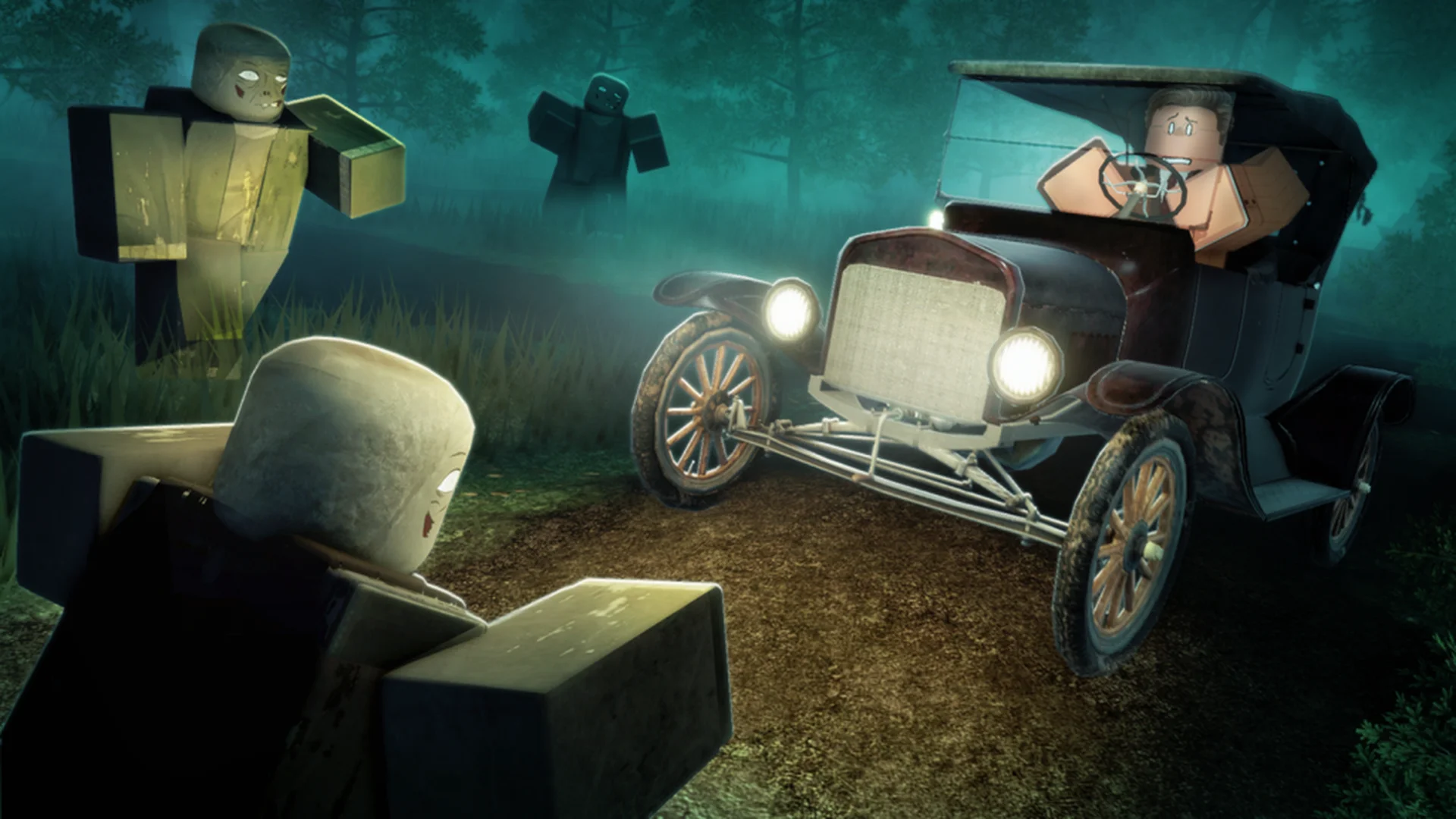
- Road to Ruin weapons should support team survival, not just personal damage output.
- Ammunition is a shared resource, so track it before entering dangerous areas.
- Combat roles work best when players divide frontline, guard, scavenger, and support duties.
- Weapon priority changes with route length, enemy pressure, inventory space, and team condition.
- Exact weapon names and stats should be confirmed against the current 2026 Alpha build before publication.
Road to Ruin Weapons: What Is Confirmed
Road to Ruin is a Roblox multiplayer survival horror experience set around a dangerous 1930s road journey. Its core loop combines vehicle travel, scavenging, resource management, enemy encounters, and cooperative decision-making. Weapons are part of that survival loop, but the available reference material does not confirm a complete list of named weapons, damage values, fire rates, or rarity tiers.
That means the safest way to build a weapons guide is to focus on combat function, ammunition management, and team composition rather than inventing unsupported weapon rankings.
The Road to Ruin game listing describes a multiplayer survival experience with exploration, supplies, vehicles, and enemy pressure. The public information supports weapon-planning advice, but individual weapon statistics remain subject to Alpha changes.
| Weapon planning factor | Why it matters | Recommended priority |
|---|---|---|
| Damage reliability | Determines how quickly a threat can be controlled | High |
| Ammunition demand | Affects how long the team can remain combat-ready | Very high |
| Effective range | Helps protect players from exposed encounters | High |
| Inventory cost | Limits space for food, medical supplies, and fuel | Medium to high |
| Team role fit | Prevents every player from carrying the same function | Very high |
| Retreat flexibility | Supports safer decisions when a fight becomes costly | High |
The current references do not verify specific weapon names or numerical stats. Treat exact damage, rarity, and ammunition claims as unconfirmed until Studio Lumis publishes them for the 2026 Alpha.
Weapon Roles and Team Loadouts
A strong team should not treat every player as an identical damage dealer. Road to Ruin rewards groups that can search, protect the vehicle, carry shared supplies, and respond to threats without exhausting all resources during the first encounter.
Use practical roles when organizing a squad:
Combat Guard
- Primary focus: Threat response
- Protects nearby teammates
- Keeps ammunition available for dangerous encounters
- Avoids chasing enemies away from the route
Survival Lead
- Primary focus: Movement and decisions
- Chooses when to fight or retreat
- Keeps the team together
- Maintains a clear route back to the vehicle
Scavenger
- Primary focus: Loot efficiency
- Searches for weapons and ammunition
- Leaves low-value items behind
- Returns important supplies to shared storage
Support Runner
- Primary focus: Recovery and coordination
- Tracks separated teammates
- Carries reserve supplies
- Helps the group regroup after combat
The best loadout is therefore situational. A player assigned to guard the group may need the most dependable combat option, while a scavenger should avoid filling their inventory with excessive ammunition if the team lacks medical supplies or fuel.
| Team position | Weapon priority | Secondary priority | Main mistake |
|---|---|---|---|
| Combat Guard | Reliable combat weapon | Ammunition reserve | Starting fights without an exit |
| Survival Lead | Flexible weapon | Route awareness | Advancing while teammates are separated |
| Scavenger | Lightweight option | Inventory space | Carrying duplicate low-value items |
| Support Runner | Backup weapon | Medical or utility supplies | Leaving the vehicle without a plan |
Before leaving the vehicle, assign one player to monitor shared ammunition and another to confirm that essential food, medical supplies, and fuel are covered.
How to Manage Weapons and Ammunition
Weapons are only useful when the team can sustain their ammunition and still carry the supplies needed for the next road section. The available planning material identifies weapons and ammunition as separate loot categories, which makes inventory discipline especially important.
Use this priority order when storage is limited:
- Keep the weapon that best matches the next known threat.
- Carry enough ammunition for confirmed dangers rather than every possible encounter.
- Preserve space for medical supplies and objective-linked items.
- Share spare ammunition with the player whose weapon has the greatest team value.
- Reassess the loadout after every major scavenging stop.
Immediate Use Versus Reserve
Do not spend ammunition simply because an enemy is visible. If the route allows the team to retreat, reposition, or avoid an encounter, conserving ammunition may be the stronger decision. Combat becomes more valuable when it protects an objective, prevents a teammate from being overwhelmed, or opens a necessary route.
| Situation | Weapon decision | Ammunition decision |
|---|---|---|
| Ordinary exposed road | Equip a dependable option | Avoid unnecessary shots |
| Tight or hazardous route | Use the weapon with the clearest response | Keep a reserve for close pressure |
| Separated teammate | Stay near the group if possible | Spend only to create a safe rescue window |
| Major objective | Prepare before activation | Reserve ammunition for the final threat |
| Low inventory space | Keep the most reliable option | Drop low-priority duplicates first |
Inventory Rules
Use the following rules during a run:
- Do not let one player carry every weapon-related resource.
- Keep ammunition near the player responsible for the main combat role.
- Return spare supplies to the vehicle when the team reaches a safe checkpoint.
- Do not discard objective-linked items to carry unnecessary duplicates.
- Recheck ammunition after a large encounter instead of assuming the original plan still works.
A weapon-heavy inventory can create a hidden survival problem. If the team lacks healing, fuel, or food, carrying more ammunition may reduce the group’s ability to complete the journey.
Step-by-Step Weapon Preparation
Use this process before each major route section. It works for both fixed groups and public-server teams because it focuses on communication, inventory control, and retreat planning.
Check the Next Route Section
Identify whether the next area is a normal scavenging location, a dangerous transition, a supply point, or a major objective. The expected threat should determine how much combat equipment the team carries.
Assign the Primary Combat Role
Choose the player who will respond first to enemy pressure. Give that player the most dependable available weapon and confirm that their ammunition supply is usable.
Distribute Backup Resources
Move spare ammunition, medical supplies, and utility items between teammates. Avoid placing every important resource in one inventory, especially during a risky route.
Set the Engagement Rule
Agree on when the team will fight, reposition, or retreat. A short callout such as “fall back” prevents players from chasing separate targets in different directions.
Recheck After Combat
After an encounter, inspect weapon readiness, ammunition, health, and vehicle supplies. If the team is weakened, return to the vehicle or choose a safer route instead of continuing automatically.
Safe and High-Yield Weapon Decisions
Road to Ruin route planning involves a tradeoff between safer progress and higher-yield exploration. A detour may provide weapons or ammunition, but it can also expose the team to additional enemies and consume resources needed later.
| Route choice | Weapon approach | Best use |
|---|---|---|
| Safer route | Carry reliable equipment and conserve ammunition | Progress with limited supplies |
| High-yield detour | Carry stronger reserves and leave inventory space | Search for valuable resources |
| Objective route | Prepare the full team before activation | Major encounter or progression |
| Emergency retreat | Keep a usable weapon on the escape path | Recover from a failed engagement |
A successful loadout is not the one with the most weapons. It is the one that lets the team reach the next objective with combat, medical, and travel resources still available.
Weapon Checklist and FAQ
Use this checklist before departure, after a major loot stop, and before activating a dangerous objective.
Weapon Readiness Checklist:
- Assign one primary combat player
- Confirm that ammunition is shared and usable
- Leave inventory space for medical and objective items
- Set a clear fight, reposition, and retreat rule
- Recheck weapons and supplies after every major encounter
Priority Summary
| Goal | Recommended action | Avoid |
|---|---|---|
| Protect the team | Keep the guard close to vulnerable players | Chasing enemies alone |
| Preserve ammunition | Fight confirmed threats and major blockers | Shooting every visible target |
| Improve inventory value | Carry reliable equipment and essential supplies | Hoarding duplicate weapons |
| Complete objectives | Prepare before triggering major encounters | Starting with low health or no reserve |
| Survive the route | Retreat when the team is split or depleted | Continuing because the route has already started |
Q: What are the best Road to Ruin weapons?
The available 2026 Alpha information does not confirm named weapons, damage values, or a stable tier list. For now, prioritize reliability, ammunition efficiency, range, and fit with the team’s combat role.
Q: Should every player carry a weapon?
A team should maintain access to combat options, but every player does not need the same weapon setup. Balance combat equipment with food, medical supplies, fuel, objective items, and inventory space.
Q: How should teams manage ammunition?
Treat ammunition as a shared resource. Track it before dangerous sections, transfer spare rounds to the player with the highest combat responsibility, and avoid spending it on threats the team can safely bypass.
Q: Will the Road to Ruin weapons meta change?
Yes, the game is in Alpha, so weapon availability, enemy behavior, ammunition value, and route difficulty may change with future updates. Recheck loadout advice after official balance or content changes.
Use the official Roblox search entry and confirmed Studio Lumis announcements to verify future weapon names, statistics, balance changes, and new combat systems.